The road may be sealed, but it’s still remote bro.
Posted: June 28, 2025 Filed under: Camping | Tags: adventure, Camping, Cape Range, nature, ningaloo-backpacking, travel 13 Comments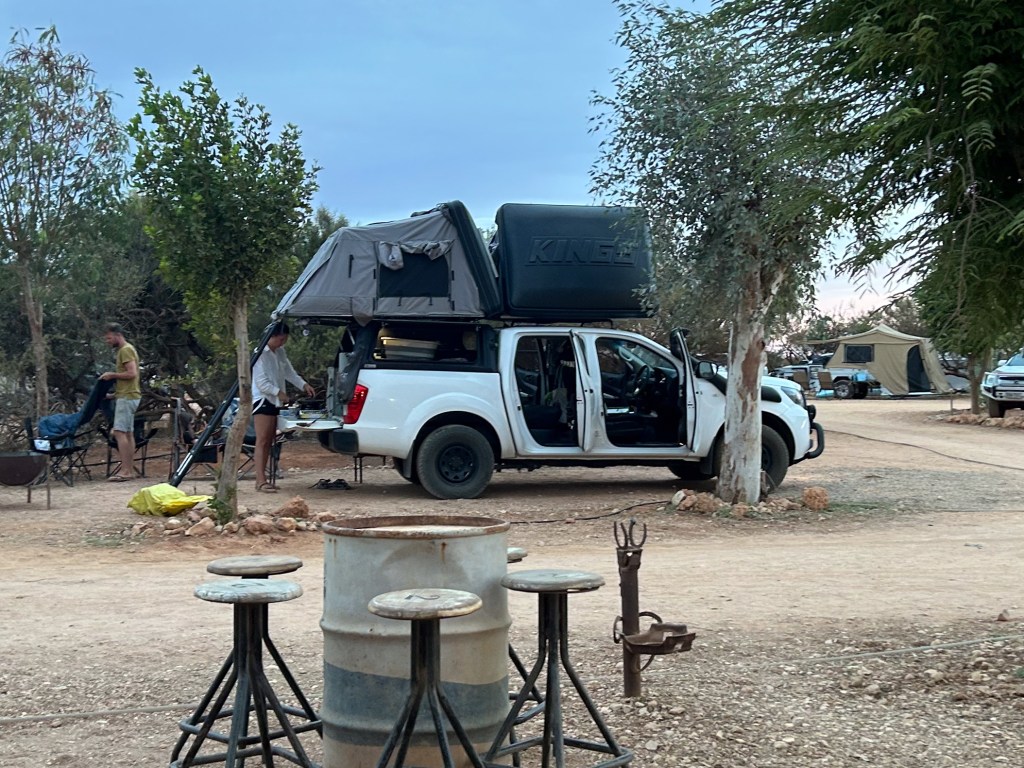
Before there were roof tents and urban 4WDs with Lane Assist, backpacking Australia meant buying a Ford or Holden station wagon (are they even a thing anymore?), a single Primus burner, a frypan and a spatula/egg-flip, a 10L water bladder you stuck in the sun for showering, and perhaps a small tent if you didn’t sleep in your car. You drove to hot and red places and met the cast of Wolf Creek, people that strove to exist under the radar. You saw snakes on the road digesting whole kangaroos, and something ate through your plastic container of pancake mix. That’s the way my Kiwi cuzzies did it, and both of them ended up marrying the partners they travelled with. A better relationship tester I cannot think of.
Fast forward to 2025. You’re a 23 year old French couple, incredibly lean, light framed (would make great cyclists), deeply tanned, effortlessly beautiful, your standard response to most things is a je-ne-sais-pas shrug, and you are living your Aussie outback dream. But growing up in the arrondissements has not equipped you for this.
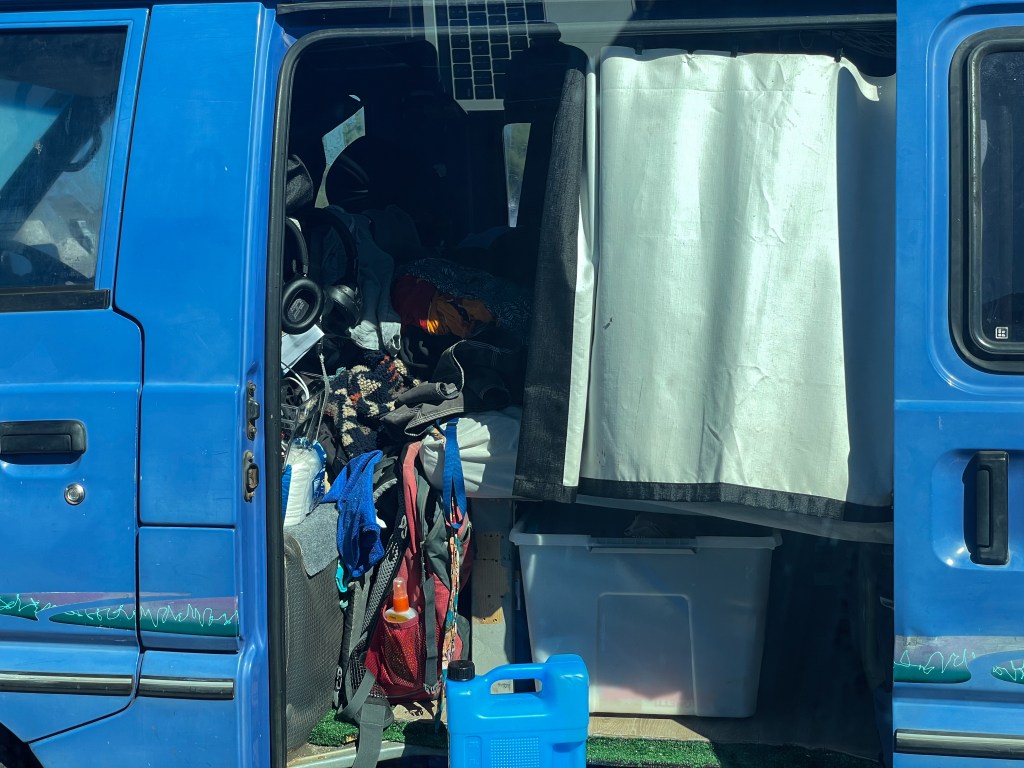
Your Range Rover is stuffed to the ceiling with everything from plastic beer tankards to a blue satin sleep mask, empty sunglasses cases, sundry plastic gadgets, empty two minute noodle containers and a hair bandana. And that’s just the front dash. You’ve populated two more car parks with your boogie board, plastic bins, ancient kite surfboard, water container and a Birkenstock. You’ve lost the ladder to your rooftop tent and the cover, so it appears to have collapsed in a heap on your roof and resembles a taco.
Yesterday you lost your only car key. Another key can only be made in the UK factory based on the engine VIN number and will take eight months. You spend two days on the beach waving a defective metal detector with a friend sifting the sand by hand in search of the car key where it probably, maybe, got dropped. Unsure.

Passing strangers show up and sift alongside you with no success. Your partner has to hitch a lift 20km to a spot with enough coverage to call the tow truck guy, then sit there for a call back to say that he was on his way, then get another 20km lift back to meet him. The towie had already been there the day before to break into your car, but only the driver’s door was able to be opened and you couldn’t get to all the stuff jammed in the back, including your food.

Waz and I joined the roll call of those determined to find the elusive key to your kingdom, but after reducing our nails to stubs and 10sqm of displaced sand later, we regrettably returned to our car, just as the towie arrived. Waz was dispatched to retrieve the treasure hunters from the dunes, and by the time they breathlessly returned, the towie had already backed up and told me a joke.
Towie: “Know why Range Rovers have heated back windows?
Me: “They do?”
Towie: “Yep. Keeps your hands warm while you’re pushing them. Hahaha”.
We chatted about how many calls he gets and Vehicles Most Likely to Fail, as you do, and then he predicted, “This car will end up at the wreckers. Had the same thing not long ago. Guy couldn’t get a key, had to trash his car.“
I see this scenario so often, I’ve invented a collective noun for it: A Debacle of Backpackers.
After 200000km around Oz, Waz and I are not eternally surprised when stuff happens. Like this. It was a boiling hot day. Waz had developed a very high temperature and because it wasn’t abating, spent a couple of days in Exmouth Hospital, while causes were unravelled. I was back at camp 80km away, without coverage and a free diary so thought I’d pop down the road for a snorkel at Oyster Stacks. I jumped in the car in bikini and towel, threw gear in the back and roared off. Three kilometres down the road the steering was off, so I stuck my head out of the window to hear a suboptimal sound and pulled over.
The rear drivers side tyre had disintegrated, frilling out decoratively around the rim. I had expected to avoid tyre changes for longer in a six week old vehicle.
First lesson: Tyres on new cars are special cheapo issue, with only half the tread of the type of tyre you’d actually want.

No worries, I’ll get the spare out, bingo, bango, bongo. With Waz away, I had taken the opportunity to empty the trailer of everything I deemed unnecessary without managerial oversight and into the car, a temporary Bin of Abandonment, not dissimilar to aforementioned backpacker vehicles. After 20 minutes, I had unearthed the jack, moved every random item out including the 80L Engel (fridge) but failed to locate the tyre toolkit. Sitting in the back feeling underdressed, with the door up and hazards on, reading a manual I never intended to, the March flies start biting.
As mentioned before, Waz had engaged a crowd in Adelaide to remove the third row of seats, and fit out the back with an extra battery, platform etc. Apparently, the tyre tools went the way of the third row. No worries, I’ll borrow someone else’s. The sparse passing vehicle traffic was driven by a mixture of no idea/infirm/hire vehicle/not getting involved, so I set off in my jandals, bikini and rashie to walk back to camp and hopefully borrow a tyre kit.
I found a guy in a Prado with three small overheated kids on a promise to go to Sandy Bay, who kindly loaned me his tools. I found a campers Starlink dish and may have aggressively texted Waz in ALL CAPS. The camp host drove me back to the car to give me a hand.
Lesson Two: Just because it’s a Prado, doesn’t mean the tyre kit is the same.
The spare is located under the vehicle with access via a flimsy plastic, very small, unnecessary channel, requiring a certain size tool. After a lot of heat, dust, flies and cries from me of, “Just break the bloody thing, I no longer care”, the tyre was liberated. But despite the collective efforts of the host (“It’s not safe to drive up onto the hard seal”), my new Swedish buddy, who had spent half a day combing sand for the French couple and would not leave until I was sorted, and his German friend (“No good. It is time for gin!”), the jack kept sinking in the sand.
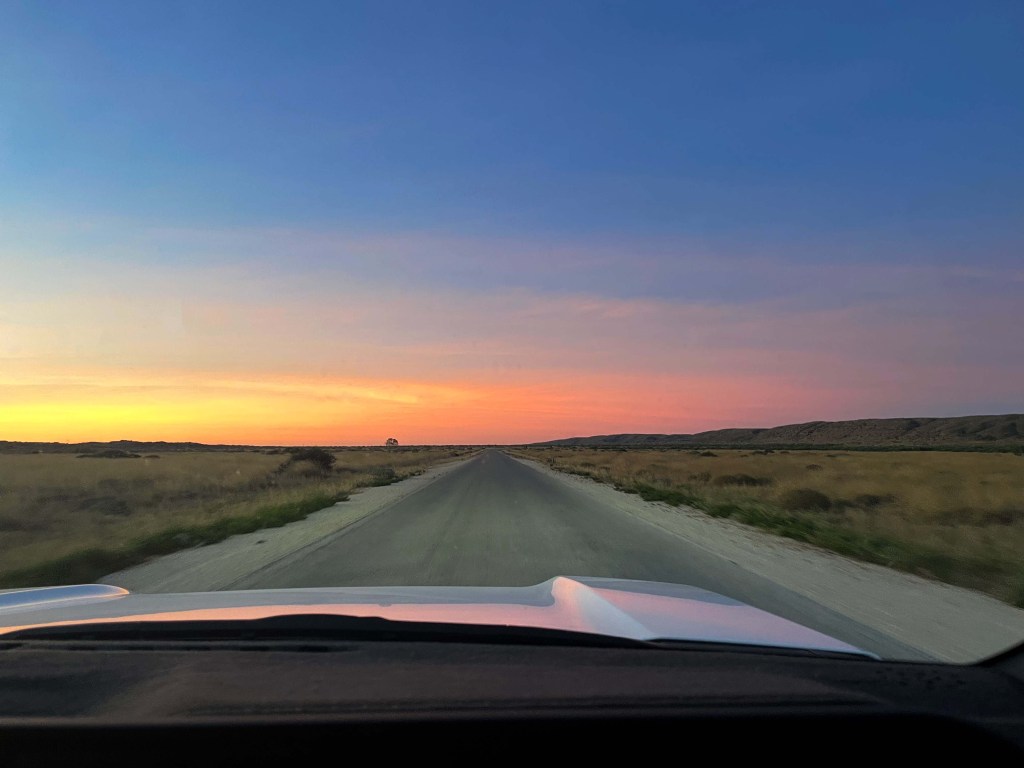
Five hours had passed. Dusk was descending. All I needed was the kind of person towing a fishing boat who would have all the tools, break the rules.
“Gidday. How ya goin’?”. Two guys hauling a Jetski, driving home from surfing the reef, simply nod at my expression and calmly pull over. Ten minutes later, done. The sun sank, and everyone could go home.
Lesson Three: People are awesome.

15 years and counting.
Posted: June 12, 2025 Filed under: Iconic Australian images | Tags: Australia, Camping, Cape Range National Park, hiking, nature, Ningaloo Reef, Nyinggulu, outback, roadtrip, snorkelling, travel, WA 3 Comments
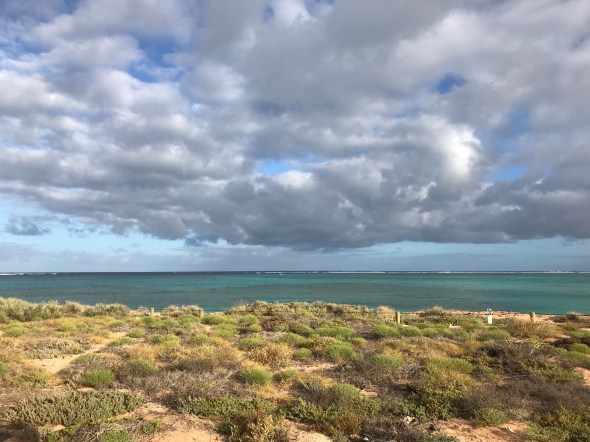
Osprey Bay is our favourite of the 11 campgrounds in Cape Range National Park. Cape Range is the most accessible entry point for Ningaloo Reef requiring a two wheel drive vehicle, and 20m walk into the water to see reef fish going about their business. We’ve been coming to Cape Range since around 2010, and our first favourite was Lakeside campground before a severe storm washed it away along with someone’s camper trailer, which has not been seen since.

Each of the bays offer something different. Turquoise Bay is Insta famous for its prettiness. Oyster Stacks for the amazing array of fish, and Osprey? The turtles. So many turtles, it’s turtle soup. You can also get a campsite right on the water, with a view of the ocean, sunset, and whales breaching between August and October. Of course, there’s a cost to this. Not the $20 a night we pay for our prime real estate, but eight months prior we get up around 15 nights in total at 2.30am Adelaide time, in order to book a site. Harder to get than an AFL Grand Final ticket, sites are released at midnight Perth local time, six months ahead of the available date, and book out within LITERAL seconds. Waz has it down to a fine art, honed over many nights poring over multiple screens to eventual fail yet again. His commitment and attention to the matter of booking Osprey every year is probably one of his greatest achievements to date. Determined to beat all odds, he had me lurch awake with him at 2.10am and sit in front of my laptop and iPhone with strict instructions and a timing countdown to the second for when I was to repeatedly refresh my screens.
So here we are. At our favourite place, in our favourite site. Over 16 years of travelling around Australia, we have finessed the set up somewhat. We started staying at Roadhouses where there were so many mice the ground looked like it was moving. We stayed in Backpacker Hostels with the great unwashed and your stuff went missing from the line. We’ve stayed in Motels where you wake up with mouse poo on your pillow, freakishly next to your mouth. About 2009 we upgraded to a swag. For the non-Aussies that’s a giant canvas pillowcase you put your sleeping bag in, squeeze into that, and spend the rest of the night claustrophobically seeking air around the canvas covering over head. At Mt Dare in the centre of Australia, we had dingoes sniffing our toes, and awoke to a blanket of frost on the swag exterior, and 100% condensation in the interior.
In 2010 we spoilt ourselves with a two room tent, the construction of which was longer than the time we slept in it, and a solid marriage tester. In 2011 we hired a soft floor camper trailer and giddy with the luxury, decided to buy one off Gumtree located in Brisbane, not so far from Woodend, Victoria. One week after spending four months long service leave around the country in the soft floor, Waz got all excited and bought a hard floor, our first Aussie Swag, a triumph of Australian engineering and practicality. We had moved to Perth at the time, so I was dispatched to QLD to retrieve it. I had nights on the Nullarbor alone, but the busy Roadhouses were actually scarier. To get to your room you have to walk past a line of male guests sitting outside their rooms smoking and holding a tinny of Jack and coke and silently watching you. Then there’s the vehicles that double back when you’re at an outpost service station, and the driver pulls up to chat. No refuelling.
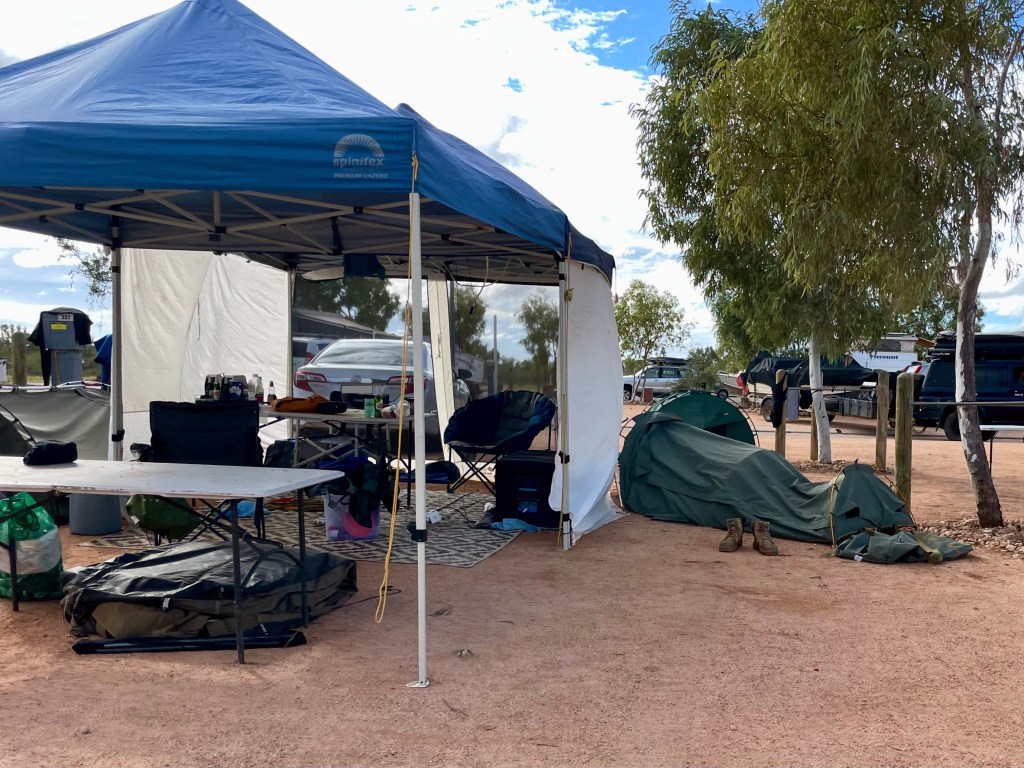
9 years and about 200000km later we are we are in our second Aussie Swag and out at Osprey, we are an oddity. It used to be a mix of hippy camper vans, a chaotic mess of two minute noodles, incense, tie dye, and an interior that looked like it needed a forensic clean, grey nomads in well loved Millard, Coromal and Jayco caravans, and tiny two man tents housing hardy Scandinavians, shelf stable wraps, cans of tuna and boiled eggs. Now it is either enormous caravans, roof top tents, or fancy camper vans, and about every two weeks a camper trailer may appear for a night or two. The demographic has changed over 15 years as well. What were hardy fisher folk, adventurous grey nomads, alternative lifestylers and remarkably intrepid Europeans are now mostly young families doing a one year loop, retirees, 25-30 somethings on a two week break seeking Insta moments, and a considerable representation of the European and South American continents. Campsites are awash with bikes, boats, scooters, skateboards, inflatable stand up paddle-boards, satellite and Starlink dishes. Some sites look like a teenage boys bedroom, others are, well, like ours.

We’ve set up often enough now that the recriminations are long gone and we now have our assigned tasks which we have allocated without discussion. Usually set up occurs in blazing sun, occasionally with a testing wind, so the less said, the better. It takes about two hours to do the full one month occupation set up, after which there is cold beer and a swim to reinstate a sense of humour.
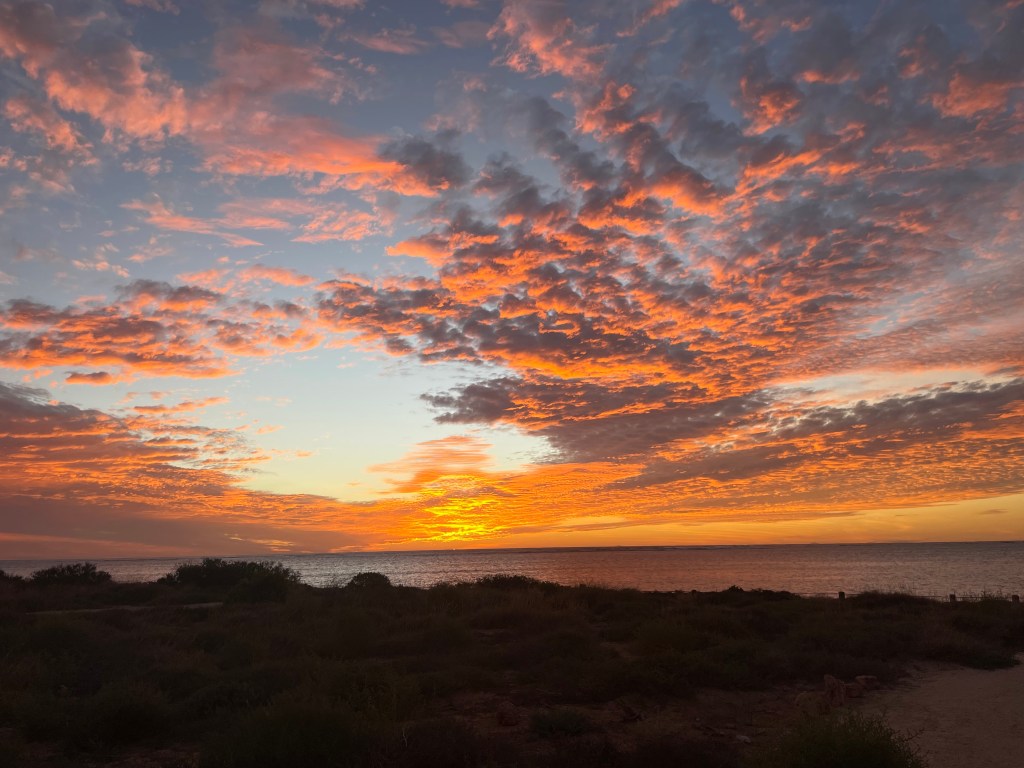
Not at all soft.
Posted: June 6, 2025 Filed under: Iconic Australian images | Tags: adventure, Australia, Camping, exmouth, hiking, landscapes, nature, outback, roadsides, Roadtrips, travel, WA 1 Comment
As you travel through the Gascoyne region toward Exmouth, Cape Range National Park and Ningaloo/Nyinggulu reef, the terrain quickly becomes deep red and festooned with vegetation that is generally out to get you. Soft looking spinifex will shred your shins faster than you can say “wish I’d picked another path”, and snakes, bull-ants and March flies with anger management issues sit seething in wait. Our eventual destination is Osprey Bay, 80km from Exmouth town, and 1250km north of Perth.
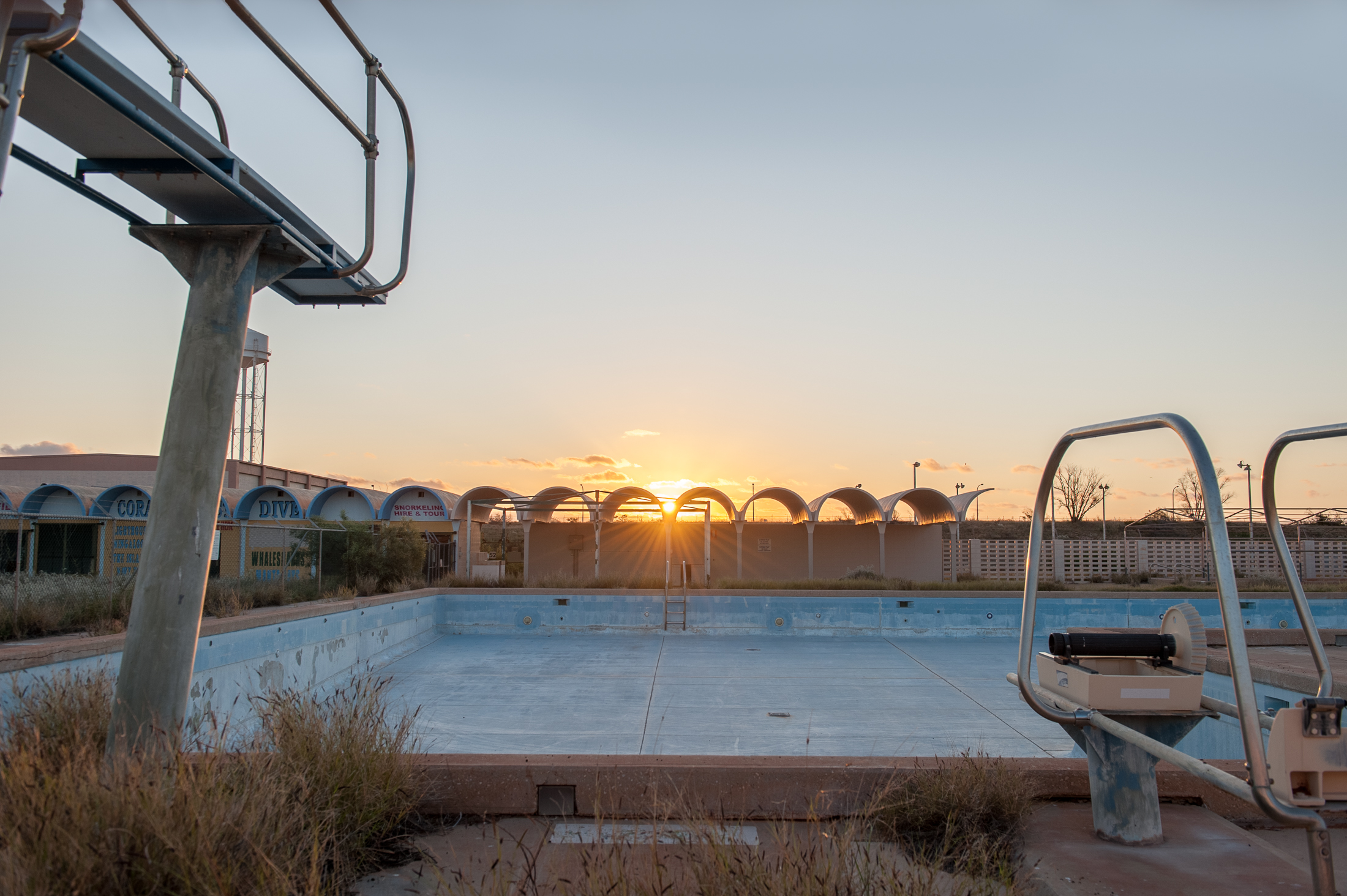
Exmouth was created in 1967 to support US naval operations during the Cold War, specifically a very-low-frequency transmitting station capable of sending messages to submarines. The transmissions are enabled by incredibly high spidery towers, including one that is 387 metres high, the tallest man made structure in the Southern Hemisphere until Tower 108 in Melbourne in 2019 took the title. Not sure why. In 1992, the US Navy passed command to the Royal Australian Navy and it is now run by Defence. For military buffs, Mike Hughes gives a more detailed account and the comments section has some interesting memories shared by those who worked there over the decades. Before Russia got a bit excited once more in recent times and security ramped up, you could walk around the 1960’s American base with the original architecture, bowling alley, swimming pool, and super wide streets, like it was a museum.

Over the last couple of years a veritable farm of radars has popped up, allegedly weaponised, as one undoubtably anti-vaxxer whispered to Warren. This farm turns out to be Australia’s Deep-Space Advanced Radar Capability (DARC), a joint tri-nation endeavour between the US, UK and Australia, to globally track objects up to 22,000 miles above Earth, like weather, space debris, and oh yes, hostile or ‘malign’ activity.
Thundering past the radar farm every morning at around 8am, vehicles and caravans point missile-like to their allotted campsites, whereupon they circle like vultures until the incumbents vacate. Many of these stay the night before at Bullara Station, a working cattle station that started out with a few campsites on offer around 15 years ago, and now offers lodge accomodation, huts, cottages, and fancy safari tents as well for 100’s of people per night.


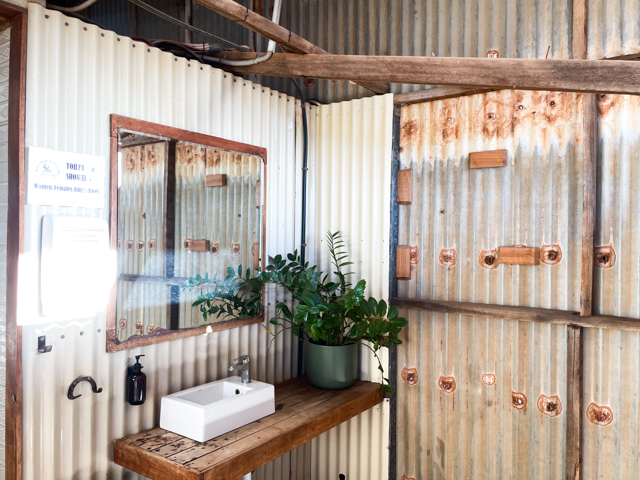

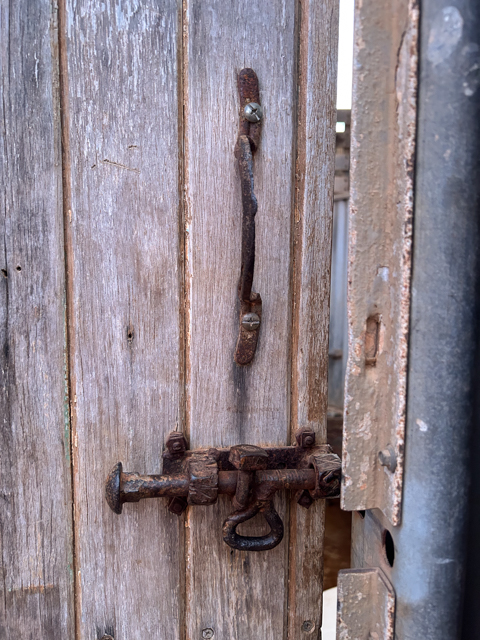
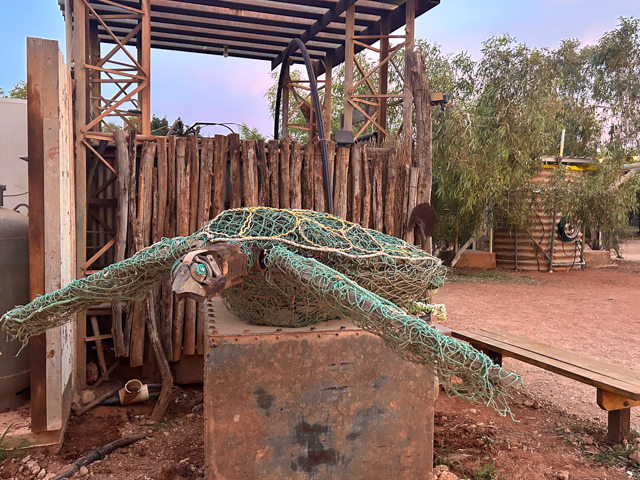
It features one of my favourite kinds of architecture, I call it Colonial Outback Station. Remoteness, extremely harsh environments and 1400km to Bunnings has spawned incredibly creative and beautiful re-use of practical farm equipment and materials. Horse-shoes become door pulls, windmill blades make signs, wire becomes a chandelier. Giving early settler hut vibes, you see this kind of architecture in places like El Questro, and other stations that have opened their gates to travellers wanting an authentic outback experience. With coffee. And scones. And helicopters. It makes me want to recreate it at home in Adelaide. But then it would be like the crochet beaded top I bought in Sorrento, Italy, that had no business in Woodend, Victoria.
The other thing, perhaps the main thing, about Bullara is the famed ‘Burger Night’, stated in reverential and knowing tones. People the world over book their Bullara stay for a Friday for the station beef burger and live music. Didn’t seem enough of a draw to warrant the fame, until the conga line was mentioned. It was Sunday, and with a dawning state of FOMO we resolved to book Burger Night on the way back. Tomorrow, we finally get to Osprey Bay.

You’re a galah.
Punching above its weight
Posted: May 30, 2025 Filed under: Iconic Australian images | Tags: Australia, Australian native flora, Camping, landscapes, nature, outback, Roadtrips, travel, WA, wildflowers 4 Comments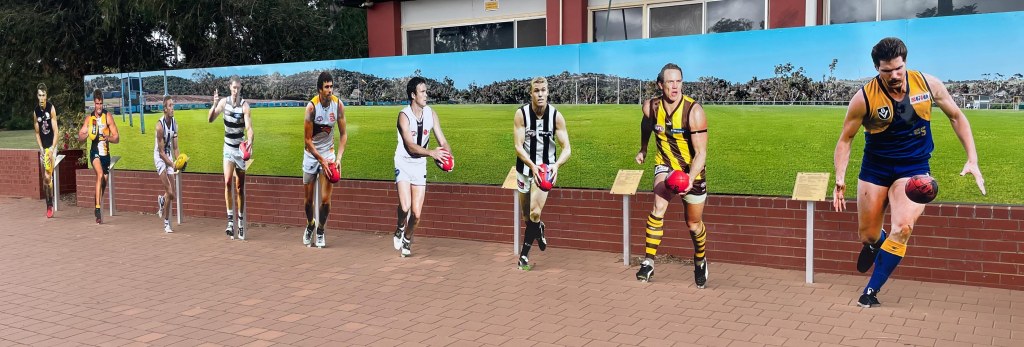
For a rural wheatbelt town of around 900 people, Northampton has managed to outdo itself in Aussie Rules football legends, producing 11 players so far. This monument to the first 9 is a stand out. Literally. Each player is life-size and eerily lifelike. I loved it, which, as someone who has zero ball skills and still asks “why has the ref taken the ball off the short guy?”, means it gets my vote as top small town artwork.
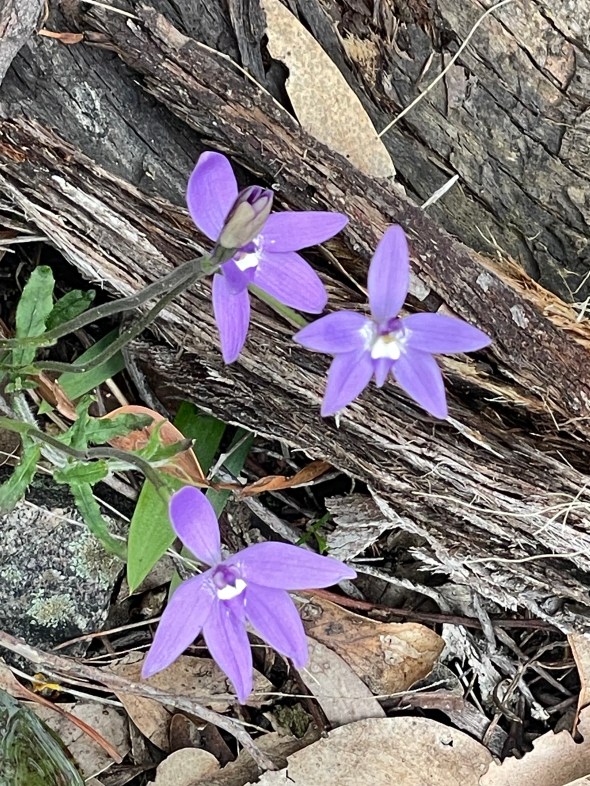
Between about June and September, the trip between Perth and Northampton is a wildflower wonder, so much so, that busloads of people tour about just to stop on roadsides to search for donkey orchids and kneel in ant nests.


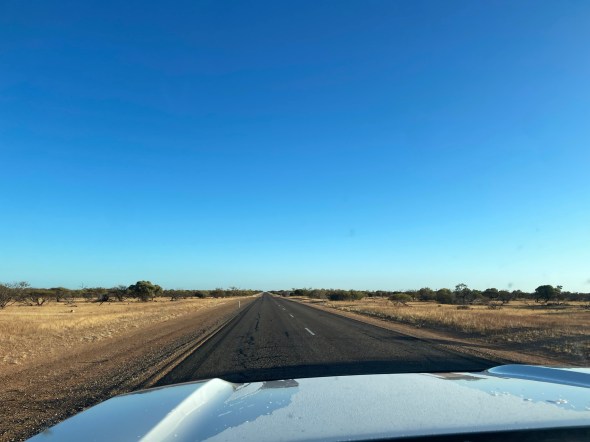
Of course, it’s May, so only the husks of summer Banksias are left, smoke from burning grain paddock stubble, and a road that looks a bit like this.
You often see the darndest things in the 110km blur that Waz affords me as we speed north as if we stole something. Case in point. An adorable small wombat moseying along on the side of the road. Did I grab it from its mother and run laughing up the road with it? No I did not, American Sam Jones, actually Strable, ‘Wildlife Biologist and Environmental Scientist’, and hunter it turns out.

What a disgrace. Bless Australia, whose wholesale outrage prompted her to flee the country, before I hunted her down and ran my own kangaroo court.
Then there’s the Woodleigh Impact Crater. One of the world’s largest, caused by a 6-12 km wide asteroid smacking into the Gasgoyne wilderness 360 million years ago. Big numbers. Big hole. And yet, inexplicably, this is where people have decided to construct a pile of rocks and manmade rubbish spanning gnomes, footwear (specifically crocs?!) creepy eyed stuffed toys, and r.i.p mementoes. Some things I have no answer for.

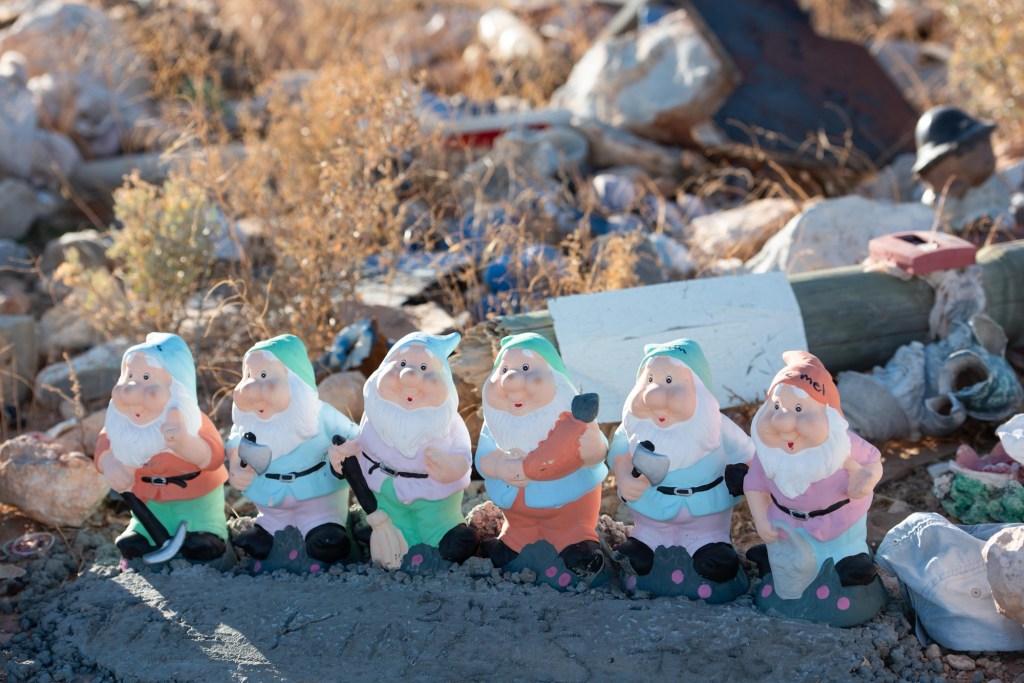
It’s getting hot, we must be close to Ningaloo!
A long way to go
Posted: October 8, 2015 Filed under: Iconic Australian images | Tags: Australia, Australian native flora, Camping, Cape Leveque, Kooljaman, landscapes, roadtrip Leave a comment
We checked into the Cable Beach Resort, and took a mere 30 minutes to streak the white towels with red dust, scatter tiny Pilbara stones from our luggage onto the floor, and appear poolside looking like we had been rehomed from under a bush.
There were two pool areas, one for families, and one other, conveniently located on the edge of our room. The family pool area had funky Ku-De-ta style music and a lively vibe. Walking into our pool area was like walking into a scene from Coocoon. People draped over noodles smiled a little too brightly, bobbing slowly on the spot to an eerie silence. Those not in the pool appeared to be recovering from cosmetic surgery, with an over representation of compression bandages and overly large hats. A guy we identified as Solar Panel took up position at dawn, and rotated all day on the same lounger to face the sun, briefly moving to a particular chair in the shade to drink a beer every hour. I wanted to give the pool scene triage, and asked the terribly pleasant barman for some music. He seemed to have been swimming in the same pool, or may have been a droid as he looked blankly, before his eyes flickered, registering the request, and advising Management had told him to turn it off.
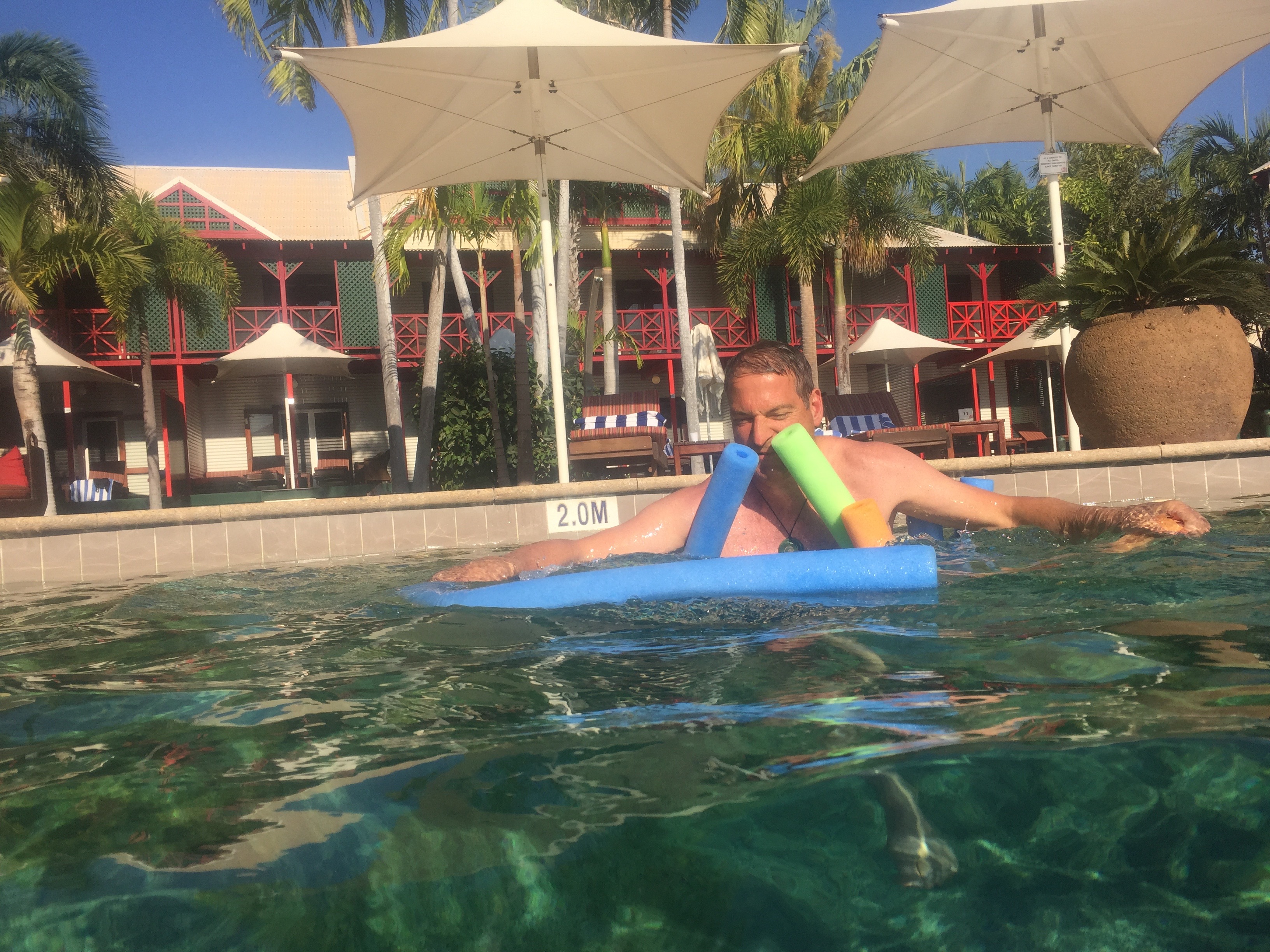
The noodles resisted W’s attempts to breathe life into them.

Broome Broome to the beach
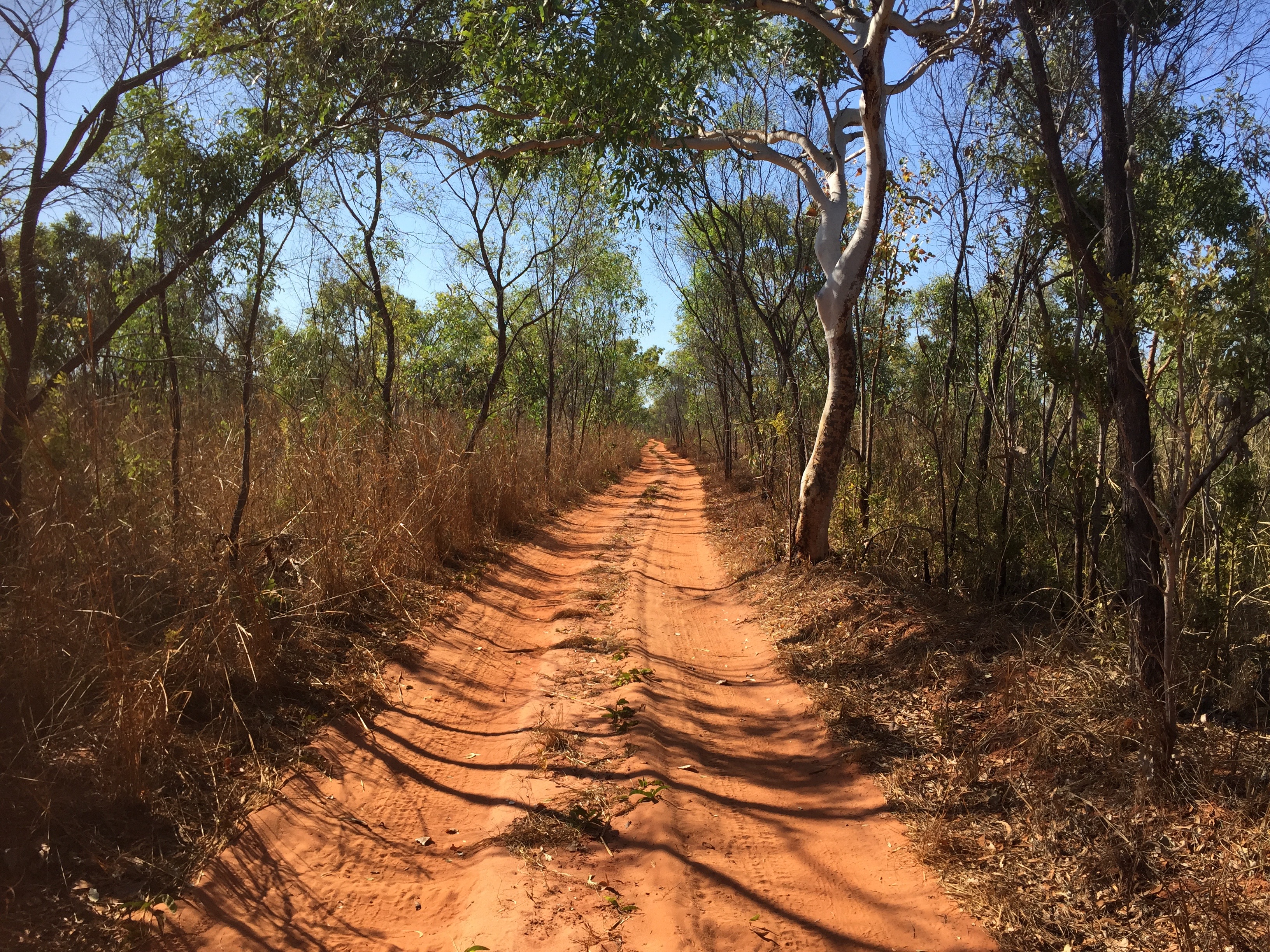
The road to Goombaragin, Cape Leveque Peninsula

Goombaragin beach
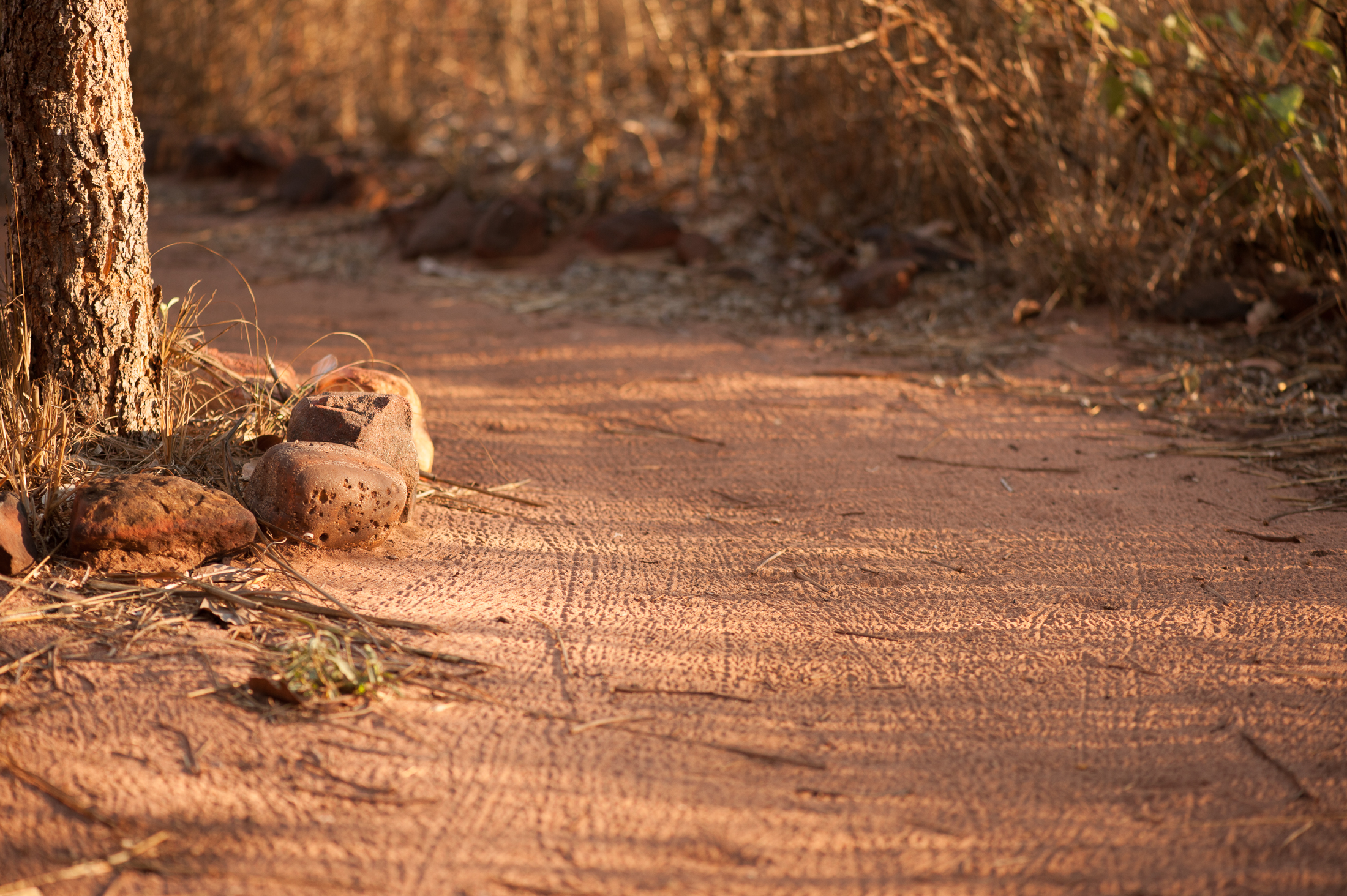
Hermit Crab Highway. Overnight, all footprints are eradicated by the march of tiny hermit crabs.

Beach hut accommodation (one of many great options) at Kooljaman

Kooljaman campground. Beautiful setting, but the gold is always in the kitchen
There is a meaningful statistical trend for the kind of travellers you find in campgrounds. The rougher it gets, the country of origin reduces down to three: German, Kiwi, and Australians under 40. You generally don’t see the guy in the t-shirt that reads: ‘This is Australia. We eat meat. We drink beer. And we speak f*kin English.’, anywhere that requires 4WD access. I reluctantly note another trend, and it is prompting a sense of vigilante-ism within. Each day I wish to be disproven, but alas, where Whizz-bangers (backpackers in forensically overloaded rental vans) have been, a trail of dry noodles and used disposable kitchenware appear on the bench, while cigarette butts, empty tuna cans, and egg shells pile up in the bush. PROVE ME WRONG people.

Western Beach
A blonde woman walked up and said to the group, “Aren’t you wonderful? I’ve never seen so many Indians together. Where are you from?”
Without skipping a beat, a particularly stylish young guy said, “Broome. You had too many cowboys, you needed some Indians.”
Blond woman: “Broome? What do you do? Are you taxi-drivers? The only Indians I have seen are taxi-drivers.”
Gorgeous lad: “Yes and we work in hospitality.”
We talked to all sorts of interesting people around Cape Leveque, including a guy we discovered had killed his wife on the basis of infidelity, “but it’s ok, he did time”. We offered to show a lovely German guy the snorkelling spots and a lift over the hill (it’s about a four minute drive) and he said, “Of course you drive, you are Australian.” We covered multiple topics including the international phenomenon of pre-dawn poolside chair claim, and he said the most wanted gift at a Deutsche Bank conference he went to was a towel that read, “We have been here already”. Gold!
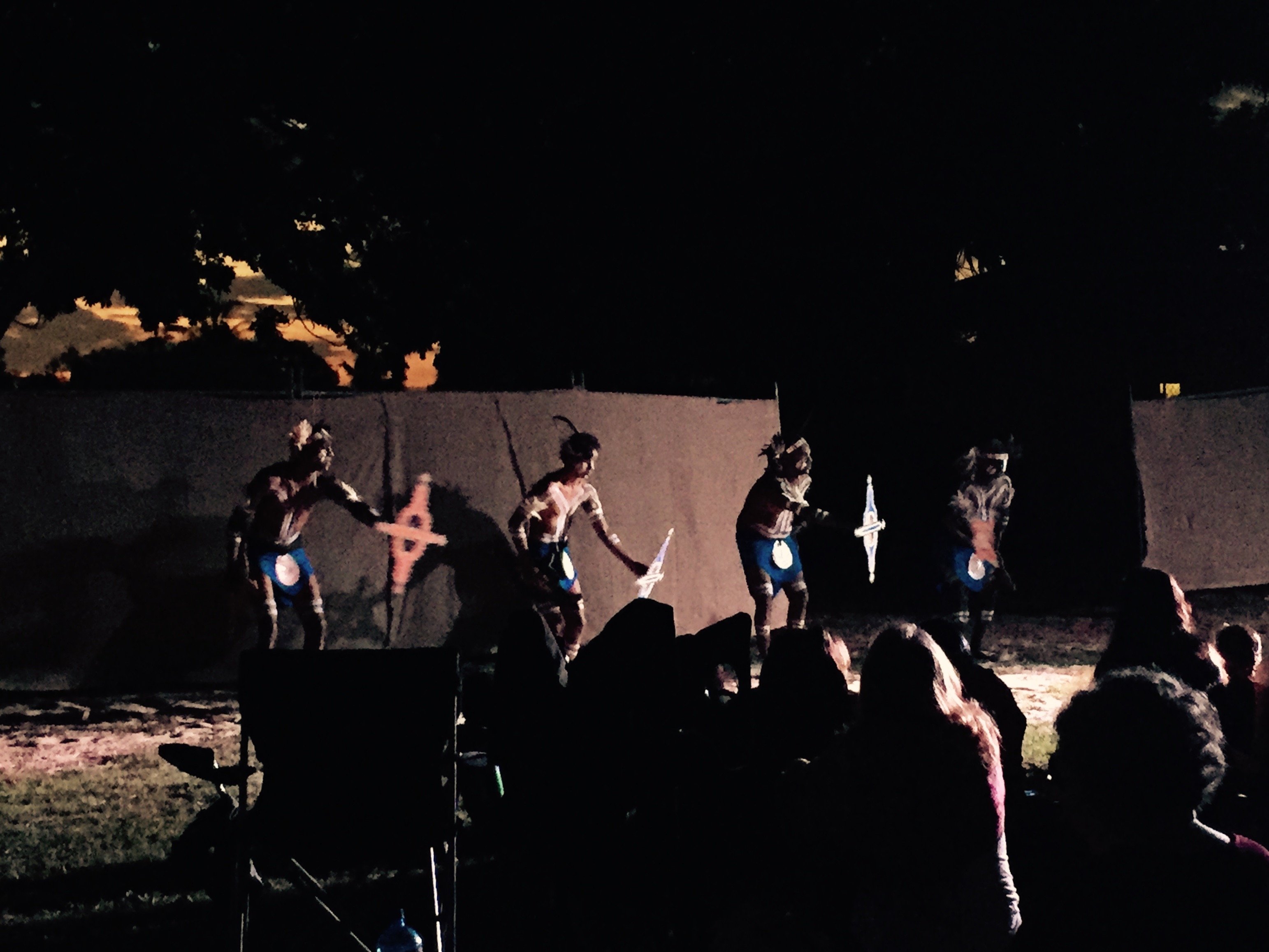
Ardi Reflections Tour. Bardi Dancers from Lombadina Community

What you looking at, Williams? Incoming anemone fish at Eastern Beach, an amazing snorkelling spot with coral gardens of wondrous design

Cape Leveque vine of unknown species!
HIGHLIGHTS from this and the last post
Broome (2200 km north of Perth) – Eat great tapas at 18 Degrees, $12 cocktails on Friday and Saturday from 3pm-5pm. Have mex-inspired breakfast or a fab almond croissant with Broomes best coffee at funky The Good Cartel café, that also does drive through.
Karijini (1400 km north of Perth) – Do all of the walks, especially the spider walk, swim every day to cool down in Fern Pool, go to Phill Witt’s REMTREK Astro Tour.
Millstream Chichester (150km east of Karratha) – Go there in May/June, get there early, and nab a campsite at Miliyanha on the outer ring, under trees. The old homestead has loads of detail about the families who lived there, and a very charming and shaded Homestead Walk. There are loads of walking tracks, and you can swim in Deep Reach pool.
Kooljaman (220km from Broome) – stay in the beach huts (need a tent) or cabins at Eastern Beach.
Never leave your wingman
Posted: August 28, 2015 Filed under: Australia, Camping, Landscapes, WA | Tags: #thisWA, Australia, Australian native flora, Camping, landscapes, roadtrip, WA, wildflowers 1 Comment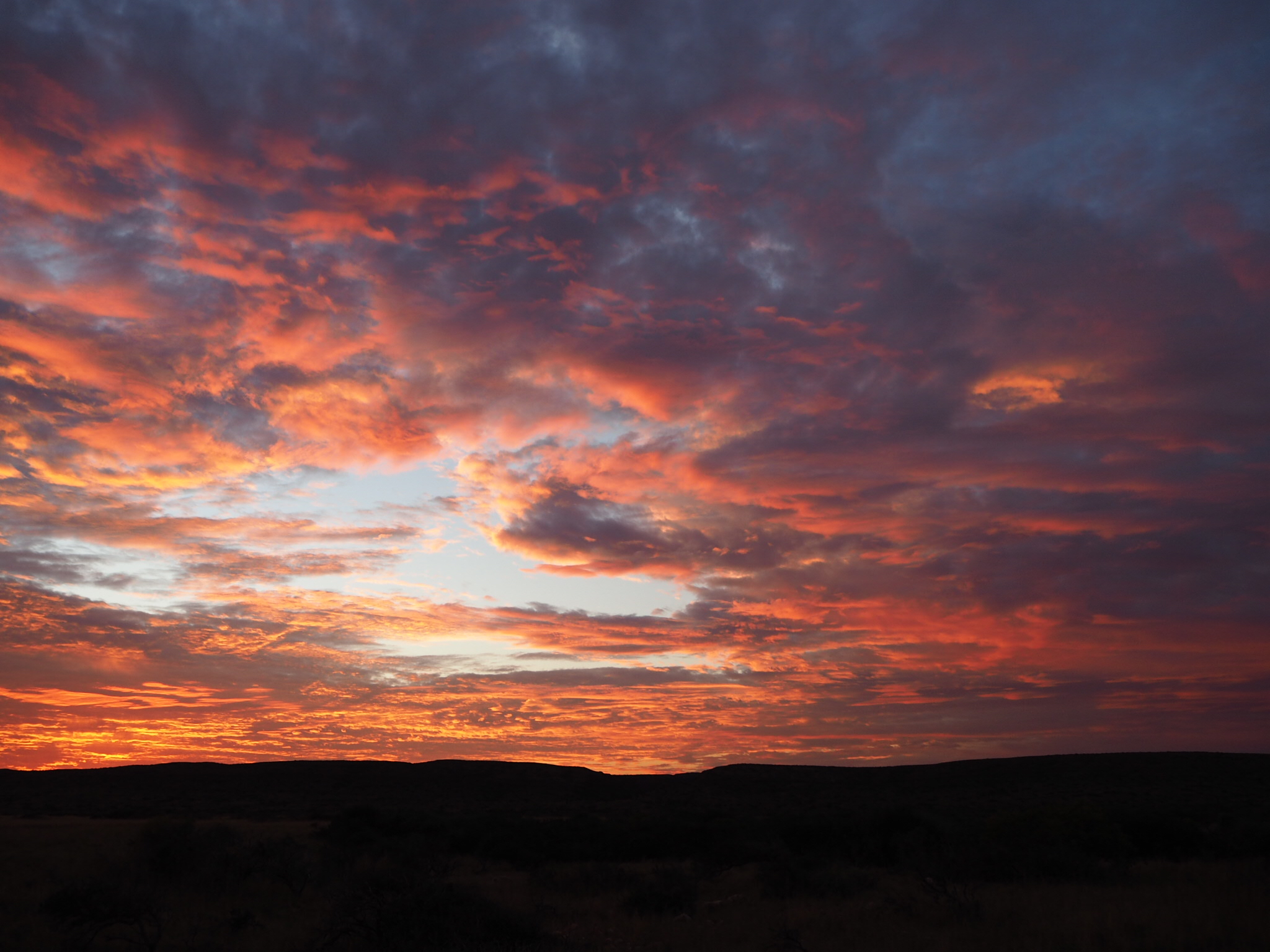
Sunrise at Tulki camp
I have cured my Exmouth Banoffee fixation. Nothing like a year away from a restaurant and the idealised memory of a dessert, to ramp expectations to other Everest proportions. For 7 years we have driven straight to Whalers from Woodend or Perth, ordered takeaway Banoffees, then proceeded with less important matters like finding somewhere to sleep.
Practically inhaling soft shell crab tacos and a great gumbo in indecent haste at Whalers latest incarnation, the reason I had come arrived. Disassembled chocolate biscuit crust fought for air under runny toffee keeping the kitchen’s last few slices of banana hostage. As if embarrassed, the historically firm piped Kahlua cream ran over the lot like a blanket, as if to say “keep moving, nothing to see here.” It was never traditional, but I will never forget. RIP.
Retro styling, now closed navy base swimming pool
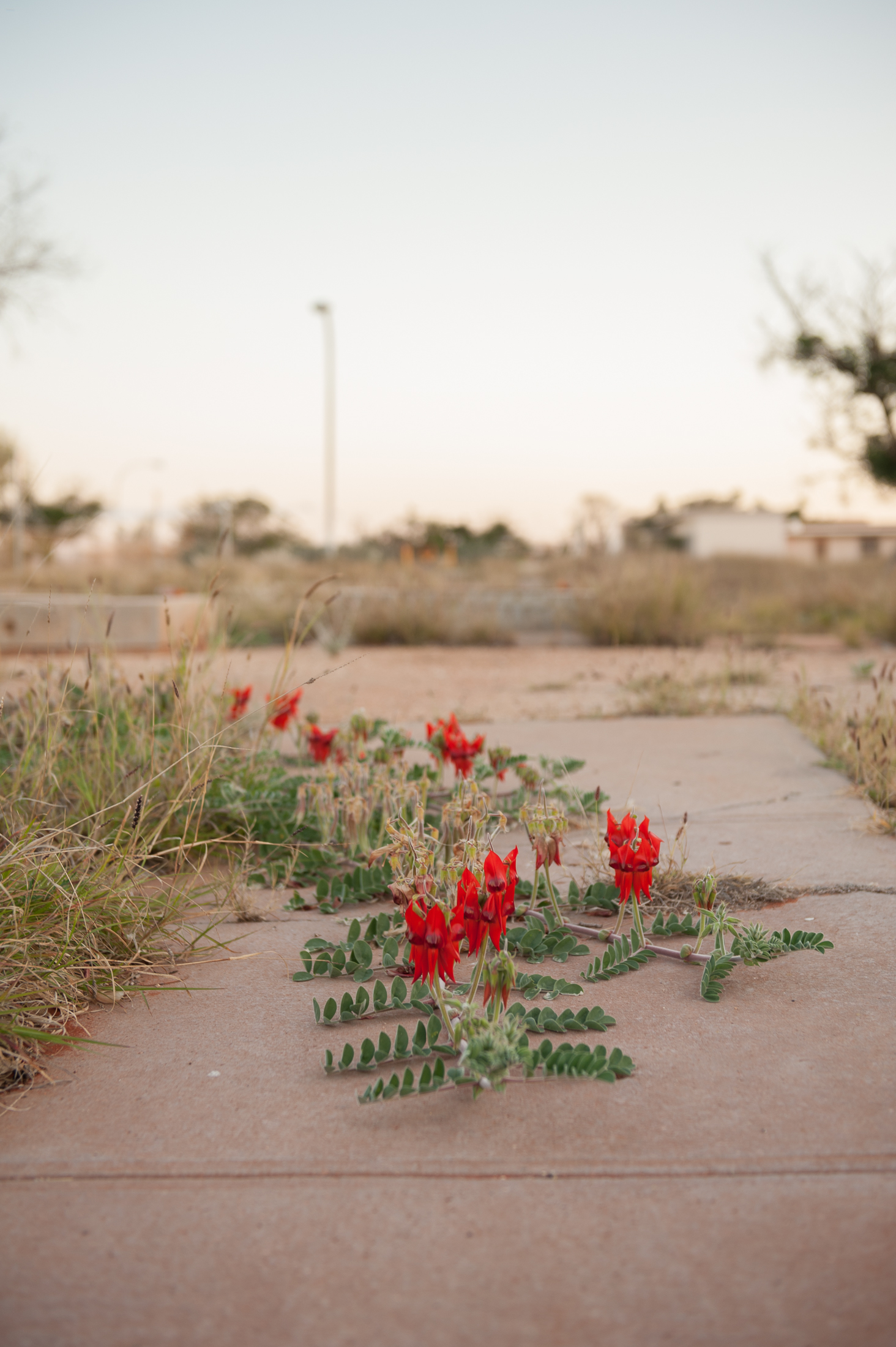
Exmouth is a great little spot with three shops you can buy beach gear from (#eternalsearchfortheperfectbikini), a massive fishing and camping shop, great coffee, and fabulous fish and chips. It is the kind of place I would choose to work if I needed country practise time in my imagined life as a Doctor. It grew around a once sizeable UN-Australian naval communications base, established in the late 60’s until 1992 when it passed to the Royal Australian Navy. The buildings remain, with faded signwriting hinting at bar and bowling alley good times, and the 200 American cars flown over to help the US families feel at home, cruising the wide streets. In 2002, all naval personnel departed, but multiple communication towers remain. An awesome retro swimming pool is fenced off presumably to LA skateboarders, and wildflowers gradually takeover the paths.
Taking over – Sturt Desert Peas make their move
W told me we would park the camper trailer and stay somewhere a bit flasher for my birthday, but first, a snorkel. Pulling up to the South Mandu snorkelling spot, a wee golf cart grabbed our bags and disappeared into the dunes.

Sal Salis whale watching spot
Sal Salis is a self-sufficient safari-tent eco-resort located within the National Park. Virtually invisible to the rest of the Park, its continued existence relies on being invisible, and adherence to closely monitored strict environmental requirements. This means the delicate flora and dune eco-systems around Sal Salis actually enjoy a far greater protection from those random visitors that stomp around the fragile dunes in the rest of the park. It attracts all sorts of people, but I would wager a heavy international patronage by current or retired IT professionals, or engineers working in the Emirates. The young teenagers that get to tag along seem to be extremely bright, immensely down-to-earth, and in the same sentence as saying “Pancakes for breakfast!!!” tell me they will go to either Oxford or Cambridge, as if it is the same thing.
Making the most of our precious 42 hours at the resort, we decided to jump in the resort kayaks and explore the reef. Still traumatised by a self-inflicted wobble into the Artic jellyfish rich waters of Norway’s Grimstad harbour, I had not chanced a kayak since. Before long, we were slicing through the water like Olympians, and en route to a spot called Blue Lagoon. W wanted to get out and snorkel so I offered to hold his kayak. Sitting in a Zen-like state I glanced over my shoulders to discover my immediate proximity to the reef edge. As waves crashed over the kayaks I realised I had hold of two paddles and a kayak, no free hands to navigate, and a one-way ticket to the outer reef. Mindful of preventing a cheese grater experience for both kayaks and myself I yelled to W to swim over and get his boat. Fighting the tidal flow, W struggled to make ground and my Zen made way for shrieking. As W reached me, I ditched the excess goods, and paddled like a steamboat on the Mississippi for shore. Meanwhile, W fought to swim out of the current, before he could mount his craft. Around 500m away I checked my wingman. Short on oxygen, W’s kayak technique improved significantly that day.

The carnival has arrived
Luxury tent time over, we repaired to Tulki, a campsite 5 km away, and took up position in the only available spot. It was sun-downer time, where the camp residents gather for drinks and discuss with mirth our camp establishment. Faced with the options of looking at other campers or the drop toilet, we went for a hybrid solution where we looked at the sunset flanked by the toilet and one campsite. We had a rock-star size tour bus next to us, but the paint job spoke less of all-nighters and more of ‘10 year old insults Pro-Hart’. The chirrup of settling birdcall fought valiantly against hits from the 50’s to the 70’s, booming out into the night from a massive video screen on the side of the bus. The occupants with radio call-sign ‘Dogs Balls’ had a jolly time, oblivious to my curmudgeon-y cursing until shut-down at 9pm when George Thorogood had his last Bourbon, Scotch, and Beer.

Let’s walk to the Pier!
The Navy Pier is allegedly one of the ten best shore dives in the world. Another world-class thing! The cyclone in March 2015 caused mayhem in the town and damaged the Pier preventing diving until further notice. Unfortunately access to the Pier is only through restricted naval property or via boat, but W heard from a local we could walk to it from Bundegi Beach and it was well worth a snorkel. We arrived at the beach at 3pm in a cloudless 31 degrees. We were told it was about a 30-minute walk, which translated to about 15 minutes knee-and-Achilles-busting W pace. Sweet. We suited up and bounced down the path to the beach. In the far distance I saw a shimmering oasis in the form of a pier. And so the trudge commenced. Collapsing into the shade of the pier, I felt somewhat uncertain about the swirling tide and the volume of liquid pouring into it from a pipe running along the pier. Having almost perished in the pursuit of this place, I got in, freaked out at a giant wall of fish (Bait-ball! Bait-ball!), the three white tip reef sharks on the bottom, cashed in my Wingman membership, and made like Thorpey for the shore.
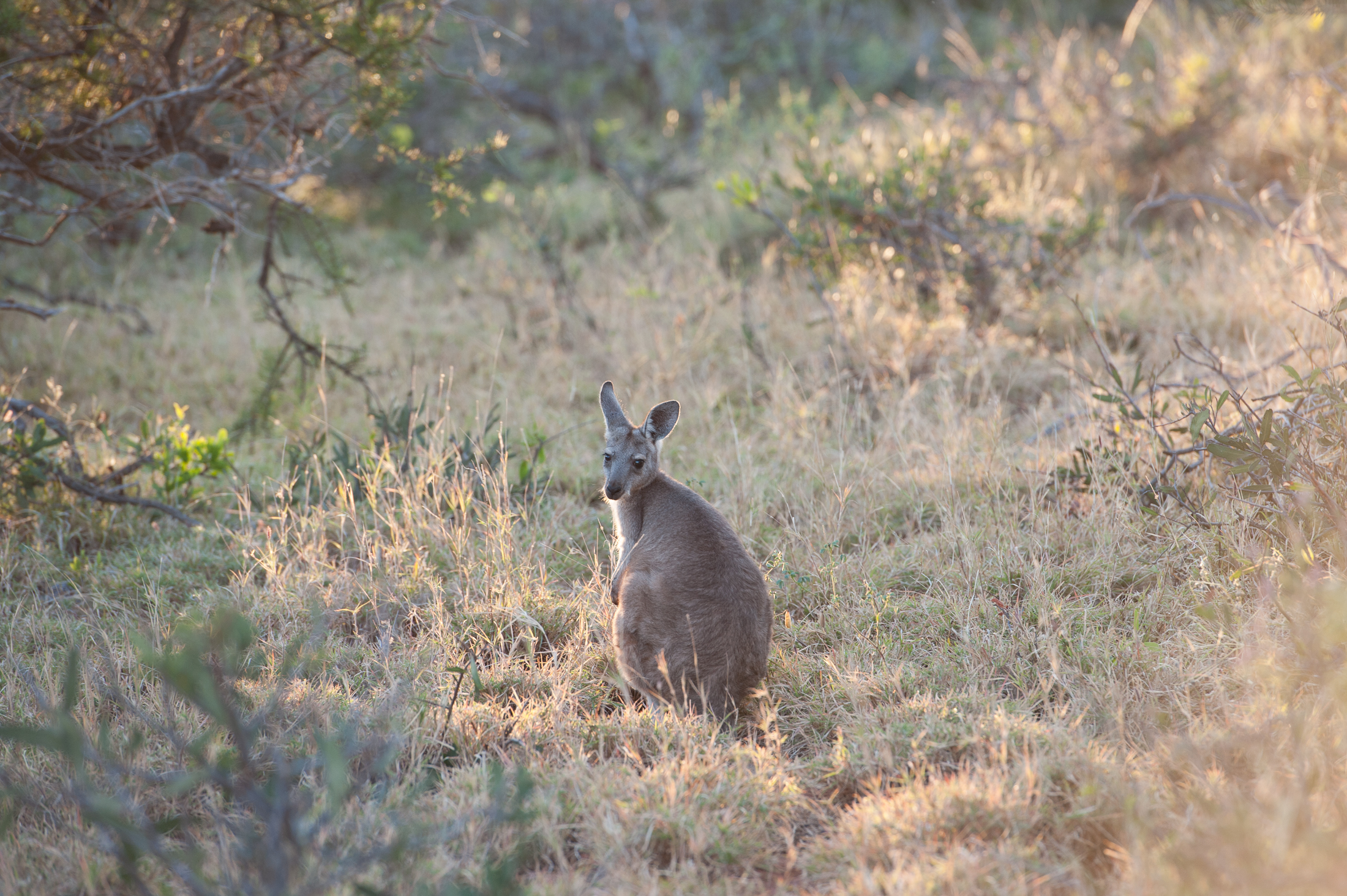
Yardie friend
Back at camp, we had used the last of our power, and it was time to head to Yardie Homestead, ‘Home of Serious Fisherman’, for a powered campsite, laundry (hallelujah) and showers. The lad refuelling the giant commercial fishing boat with two immense outboards, sporting a cap featuring plush style two dimensional man-parts on the front, alerted me to a new species of the Fisher realm.
Sea to shining sea
Posted: August 23, 2015 Filed under: Australia, Camping, Flora, Landscapes, WA | Tags: Australian native flora, Camping, landscapes, roadtrip, Warroora Station, wildflowers 6 Comments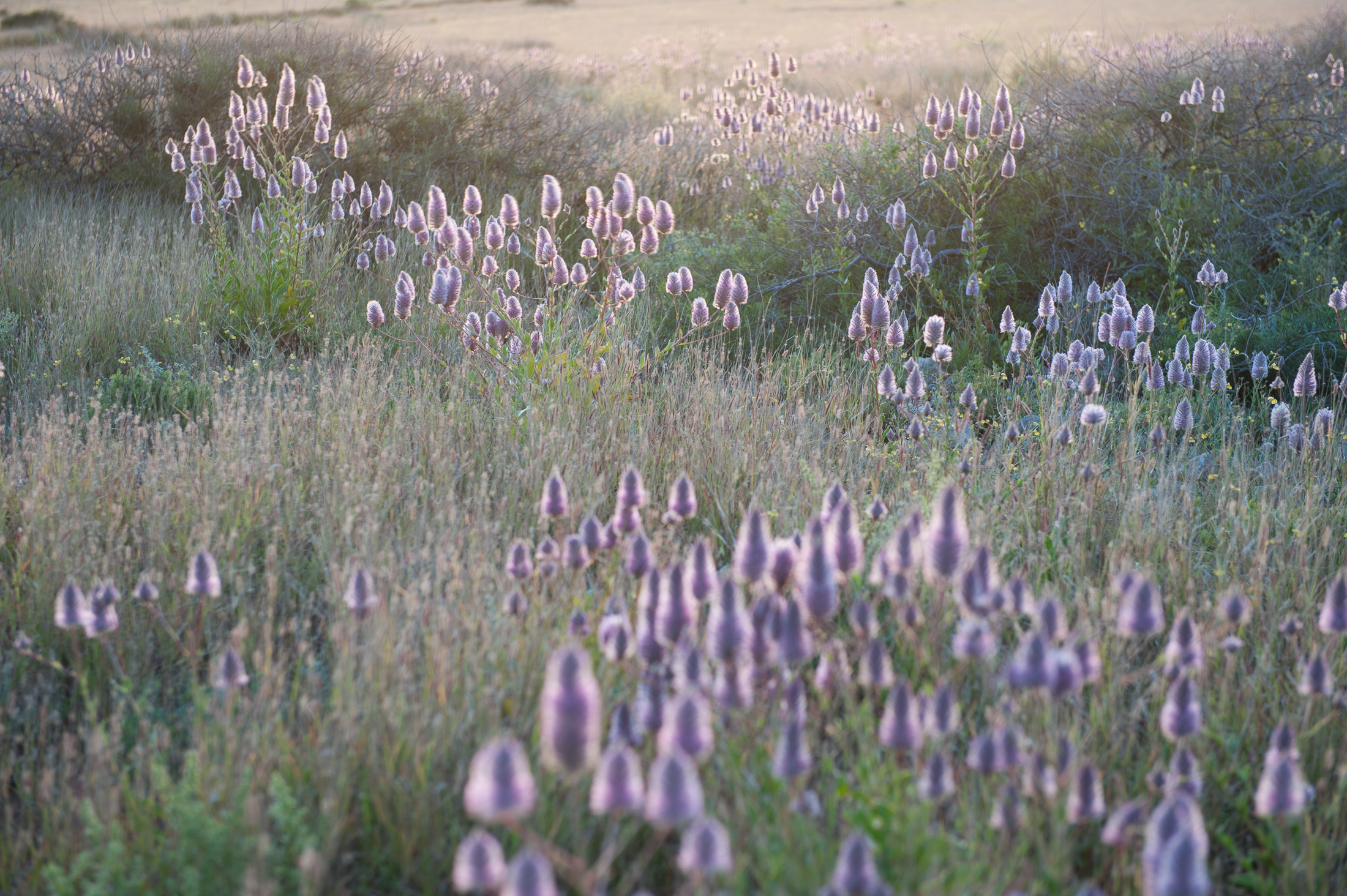
Tall Mulla Mulla, Warroora Station
Warroora Station is another link in the daisy chain of enviable properties chasing the Ningaloo reef from south to north. Around 50km south of Coral Bay, like Gnaraloo, it is best attacked with a 4WD. There are multiple camp areas along the white sand coast, so you are unlikely to awake to what at first appears to be the mating sound of a kakapo, but in truth is just the rhythmic snore of your neighbouring camper. Like all places that take some committmentto get to, it attracts an interesting array of individuals.

Warroora Station road to Elles Beach
The wind had whipped up when we came to set up camp, and with my brain still pin-balling around my cranium from the drive in, I deemed the tent annex a bridge too far to tackle. My usual rule is no annex for less than three days – it falls in the category of good humour challenge and I usually need three days to forget the fresh hell of grappling with 10 sq. metres of canvas whipped into a spinnaker, and a husband with White Line Fever basketball eyes.

Elles Beach, Warroora Station, WA
Allegedly the best snorkelling in the world
We headed to the beach to inspect the ‘best snorkelling in the world’. Pristine white sand and jewel toned water beckoned, but the hazard sign warning of extremely dangerous currents, a raging rip, and the 50 cm white caps suggested we try another day. Moving to another beach just 400 metres along, a super-fit mega-tan retiree in speedos emerged from the sea bearing a handful of knotted fishing line, sinkers, and hooks. A keen fisherman, he liked to clean up the edge of the reef on days the fishing wasn’t up to much. It was his second year back at Warroora since his wife died and he said this year was easier than the last. They had travelled everywhere together, so there was a big gap in his day, but hauling the tinny in and out by himself kept him on his toes. It was then I realised we had entered the Realm of the Fisher Folk, and suddenly I saw them everywhere.
Warroora costs only $10 per night and $50 per week to camp. It requires 100% self-sufficiency (water, firewood, chemical loo, food etc.). This suits the Tinny genus of the Fisher Folk. Incredibly resourceful, weathered, and footloose, these retirees have only grandchildren scattered about Australia to navigate to periodically and import for Vital Life Experience, but otherwise are the canniest at finding the lowest cost and wildest camp spots. Their vehicles and camping configuration are equipped to travel on 4WD roads. They fish in outfits borrowed from Lawrence of Arabia about to head into a sandstorm. They love watching us set up camp in slow motion, and the addition of the annex is like double billing at the movies. They know exactly when you drove in, how many days you have been there and what your daily movements are. Sadly they have enough freezer space for their bountiful catches, despite W’s disappointment that I have not yet wrestled a kilo or two of snapper or coral trout out of them. Favoured vehicles are utes with custom kitchen and storage setups on the tray, and a rack for the tinny on the roof. I’ve never seen a tinny put on a roof yet, and cannot fathom how they get there. My twig cycling arms cannot even lift our trailer lid, so it is a matter of awe to me.
In these locations you will come across a closely related genus – the Grisly Fisher Folk, found in the centre of a circling of the Fisher Folk wagons, standing around a 24 hour fire, and surrounded by rotating solar panels and super-powered generators. Identifiable by hides tanned the colour of nicotine, plaid plumage, and gnarled paws; they are the ones throwing back the fish bigger than 1 metre (as per the fishing limits).

Coral Bay sandwich
Wishing we had the same capacity for long term stays off the grid; we were only at Warroora because we couldn’t get a spot in the high-density craziness of Coral Bay, thank goodness. We have never quite appreciated the fabulous Coral Bay people talk about, and we were not to discover it this time. I had a few to-dos listed there but we were too early for the shark nursery at Maud Bay (September/October), the wind and cold ruled out snorkelling and taking a tinny out, but the Manta Rays were swimming around just waiting for me to pretend I was one of them, and I was going on that tour come hell or high water. Boarding the boat in a howling gale did little to temper the excitement of our small but enthusiastic bunch of adventure seekers. With only 12 on board we were able to spread ourselves out. As we spilled off the transom at the back of the boat onto our first reef, in a decent chop and the boat swinging around in circles from the wind, I felt a little sympathy for the first timers on board, hyperventilating and clutching at their masks, noodles waving wildly like promotional blow up stick people, and snorkel guides corralling like crazy and soundlessly yelling at everyone to “STaaayyy… TOgettthhherrr……..”.
Back on board, body temperatures plummeted. Hot drinks inhaled, a tray of chelsea buns (coffee scrolls) reduced to crumbs in seagull time, and colour swiftly returned to cheeks as the spotter plane called in our first Manta. Suiting up, the Germans gave no thought to the life-affirming experience of their maiden ocean snorkel, and we all leapt in again. As we followed three Mantas, in a semi circle from tip to tip, a beautiful four metre female trailed hopefully by a smaller all black male, reminded me of Torvill and Dean doing Bolero (Google that if you are under 40). Returning to the boat, everyone had turned blue but the experience rendered hypothermia a mere side effect of being so lucky to take a glide with magical creatures.
Mantas done, it was time to head to Cape Range National Park. More white sand, perfect blue water, and one of my all time favourite places. A perfect place to spend a birthday.
The Low Down

Sweeping vistas of Mulla Mulla on the station road
Warroora Station is outback coast wonder with postcard sunsets. There are beaches safe for kids, and beaches wild and full of fish. Sweeping vistas of Mulla Mulla and other wildflowers distract from your brain rattling around from the corrugations on the drive in. Some camps are accessible by 2WD. Check the website before you go to make sure you have everything you need. Chemical toilets can be hired from the Homestead, and a small array of goods and firewood are for sale. You can have an open fire. Man-folk rating of 4. You can have a fire but wood is expensive. If you can take your own stash of fence-posts, all the better to flame that cryovac-ed, grass-fed, 70-day aged steak with.
Manta Tours – Mantas are harmless, no need to fear deathly barbs. We went with Coral Bay Eco-Tour, run by a great crew. If you are new to snorkelling, they look after you. Mantas hang out in Coral Bay all year, but the busy season is July to October. Pay the extra $5 for a full length wetsuit.

So much diversity! Wildflowers, Warroora Station
And so it begins
Posted: August 11, 2015 Filed under: Australia, WA | Tags: Australian native flora, Camping, landscapes, roadsides, roadtrip, WA 11 Comments

With the nose of the Prado pointed skyward thanks to the several tonne payload, we roared off northeast. It is wildflower season in the Golden Outback, and I am intent on photographing vast vistas.
We arrived late afternoon at the Western Flora Caravan Park on the Brand Highway, to the trill of multiple birds. We set up with uncommonly minimal fuss and sat down suitably pleased with ourselves, to the first of many sunsets. The immaculate facilities appealed to my city-fresh OCD, while W’s eyes lit up at the communal fireplace. Our fellow campers were farmers I estimate in their 70’s (he was in Ballarat during WWII) with a ‘slider’ set-up which is essentially a ute fitted out with all manner of fantastic slide out things on the back, with the bed on top. A hip operation made the climb to bed impossible for a spell but didn’t mean the end of their travels.
At the campfire W tested the flammability of his runners, while I discovered a gaping hole in my proud kiwi knowledge of the difference between fine and superfine merino, Italian fabrics, and Chinese wool mills.

Generally, West Australian wildflowers present themselves from July to December, climate dependent. Recent heavy rainfall filled the land with life-giving moisture, which would mean an amazing display in a couple of weeks. After we left.
Undeterred, we headed north toward Mullewa, a town with its fair share of boarded-up shops, and nary a dog moseying down the main drag, yet you get the feeling the locals have given it a red hot go at creating points of interest. Signposted buildings from a religious past, historical walks, a Men’s’ Shed, and 4 planned ‘drives’ that take you in various directions were enough to have me thinking the annual wildflower and agricultural show on the last weekend of August would be rocking.

Wildflowers, Mullewa-Geraldton Road
Along the way, wildflowers carpeted the roadside. Individually tiny, it would be easy to roar past at 100 and not even see them. Stopping the Prado bullet with its destination-orientated driver has given W ample practise in u-turning a trailer and discarding the golden rule of No Stopping Unless Fuel Tank Is Running On Vapour. No Exceptions.

Everlasting carpet at Coalseam Conservation Park
Unable to maintain possession of W’s 20 year old Scottish mega-fleece any longer, it was time to head to the coast and break out the sunscreen. We headed north with a plan to camp at Coronation Beach. Arriving at dusk to a ‘camp full’ sign we pressed on, thinking Northampton could be an option. Some mates had stayed there for a few hours one night until the looting of vehicles outside their motel called for a 2 am mobilisation. A slow drive past the campground became a race north. Out of the sunset loomed Northbrook, a farm-stay/camp on a farm, with its own security in the form of a pair of Plovers and three tiny chicks. A Baltic windy night reminded us that random bits of tent flap require securing, and saw us packing up pre-dawn excited by the prospect of a UHT milk roadhouse coffee, and the Pickles Point fresh seafood shop at Carnarvon. Barista coffee and a massive bacon, eggs, and mushrooms at the Red Car Café, boosted cranky spirits, and a couple of hours later we found ourselves back at my favourite 3 Mile camp at Gnaraloo (pronounced Narloo), a fantastic camp and surf spot on the Ningaloo reef.
TRAVEL TIPS
Western Flora Caravan Park – At 300 km from Perth it is a good quiet weekend spot, uncrowded, dog friendly, and with enough room to chuck a ball around with the kids. Great base for Coalseam Conservation Park, exploring the region, perfect for those excited by bush-bashing in search of rare and tiny orchids, and only 70 km from fish and chips at Dongara, a town keen on Australian flags. Immaculate facilities get 5 stars.

Spider orchid at Western Flora Caravan Park
All things Western Australian wildflower – grab the wildflower guide from Tourism West Australia, http://www.australiasgoldenoutback.com/outback-australia-drive-routes/Outback_wildflower_trails, http://www.wildflowercountry.com.au

Brand Highway wildflowers
Lightning up my life
Posted: June 20, 2013 Filed under: Australia, Camping, WA | Tags: Australia, Camping, Cape Range, clouds, Lightning, WA 2 Comments
Lightning show, Cape Range National Park, WA
As my thinking is drowned out by the fans kicking in on the Mac and the interminable whir of 15 terabytes of storage, I am forced to face the fact that I have literally thousands of photos taking up space, that never see the light of day. They transition briefly through my image management software before I resign them to the Anthony Marantino (Sex and the City) “hates it!!” pile.
I freely admit to a perfectionistic streak, but rather than a charming character trait I have decided it is constraining to ones ability to share and something I must challenge. So, prepare yourself for more frequent posts. Sometimes without stories, sometimes something perhaps your three year old could do better, but the photos will always be something that grabbed me on the day. So, first cab off the rank is a shot of a fantastic lightning storm we had front row seats to, at Easter at Cape Range. It was better than the best fireworks I have ever seen. I love how the clouds are all leaning to the left. Could I love Cape Range any more?
Fear and reward
Posted: May 30, 2013 Filed under: Australia, Camping, Landscapes, WA | Tags: Australia, Camping, Cape Range National Park, exmouth, Lakeside, landscapes, Ningaloo Reef, Photography, snorkelling, sunset, Travel, WA Leave a comment
Lakeside beach
I am quietly finning along, snorkelling for the third time that day at Lakeside, on the Ningaloo Reef in the magical Cape Range National Park. If this rings a bell, it is because I harp on about the place incessantly, there is so much life out in the water. Along with Turquoise Bay, it is a favourite with day-trippers. Borne by tour buses, they amble to the spot with the snorkel marker, march directly out for around 30 metres, flop about for 20 minutes, then retire to shore to smoke, look bored with precision, and burn a new layer of ‘it sucks to be my family back in Europe’ into their undernourished frames.

Turquoise Bay smile – that little lump on the horizon is the reef
It was at Lakeside that I had an epiphany in 2008. With nothing but the rasp of parrotfish beak-on-coral in my ears, my brain found a space to discover I actually wanted to be a photographer. (And a marine biologist – but that ship had sailed). Snorkelling or diving is the only time I truly switch off. Underwater, where air is generally absent, is ironically when I feel most able to breathe. The eternally blue space, without walls or fences, represents endless possibility for me.
So, I am quietly swimming in and around the rocky outcrops, following a fish that completely changes its colour and pattern as I get close or back off, a peeved turtle, 4m ray, and pausing to watch a plague of parrotfish engulf a patch of coral, the tiny territorial resident fish dashing out and back nervously. Just when it could not get any better, a huge school of mackerel and other silvery fish with wide eyes swept past and then started circling me, gaining pace as they went round. I decided to join their circling, and as I went round and round was thinking “Choice! They think Im their bro! I’m a mermaid!”. Amazed they cared not a whit as I whipped by the other fish and matched their crazy changes in direction, I was at once silver and fishy. Then it occurred to me. They are commonly known as bait-fish. And a school of darting bait-fish are probably being chased. Not that those three reef sharks and their homies, Trevor Trevally, and Barry Barra, liked the cut of my gib, but it’s safe to say I found myself ashore with no recollection of the breathless flail between realisation and landfall.
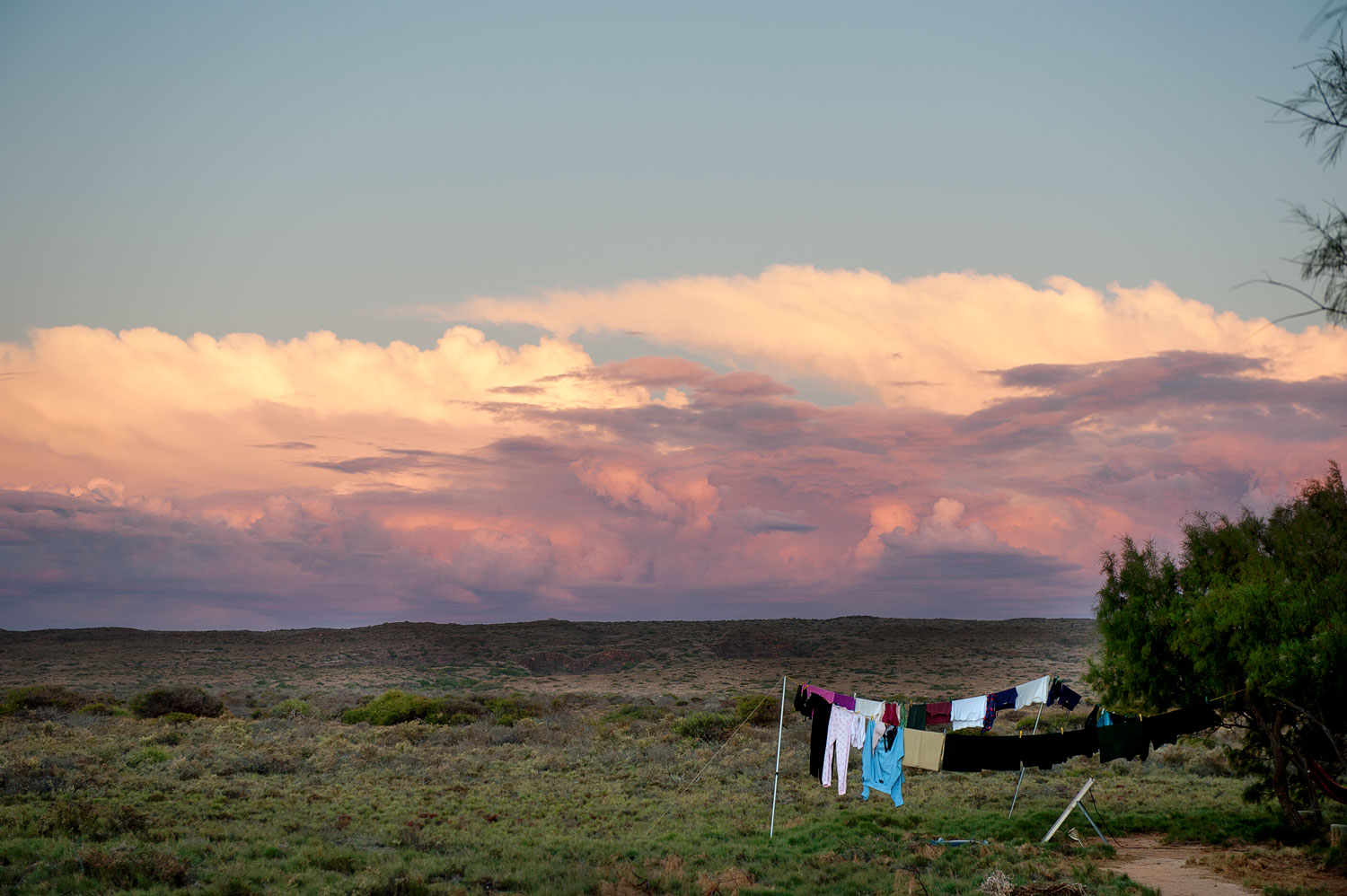
view to the west
When we returned to our camp, we shared a beverage with our lovely Swiss neighbour, J, a fellow water-baby with designs on the outer reef. He had travelled for some months around WA in his wagon, sleeping in the back, and reliant on a dwindling collection of camping ephemera. As days rolled by he realised he only used one plate, cup, knife, fork and spoon. Subsisting happily on long-life wraps, honey, nutella, and canned goods, his camp stove, multiple devices of convenience and esky (chilly bin) found new homes with the Belgians that packed every other camp site.
J wanted buddies to go and explore the outer reef. He had gone out on his own but was worried he may be…ahem…taken, and no-one would know. Fortified with a zesty cider from Harcourt in Victoria, I found myself consulting tide and moon charts and committing both W and I to an outer reef expedition with the excitement I always have when an adventure of any kind is afoot, and drive I have to never miss out.
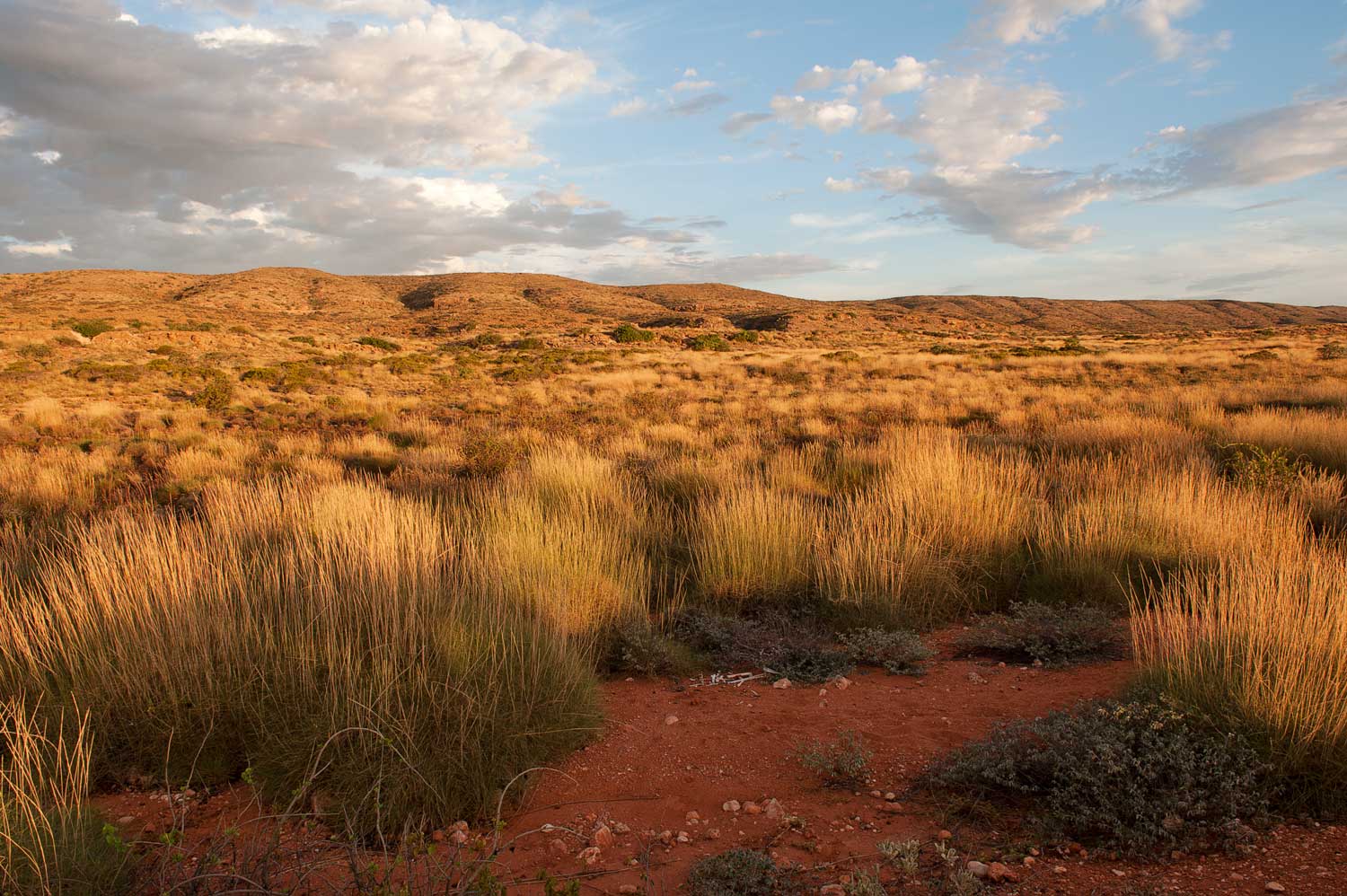
Cape Range National Park
The following day, in the last 30 minutes of an incoming tide was the only opportunity in the next 7 days, when the tide would be high enough to swim over the reef edge. J knew the way and so three small figures swam out to the reef, quickly invisible to those on shore. The thing about a reef is that waves from the outside hit the edge, rise up and then smash down. Along with a titan tidal-pull, I found myself swimming two strokes forward, getting drilled by excitable waves, then dragged back 4 strokes, enjoying a nasal flush along the way. I don’t think it is a spoiler alert to say we made it, and the silence on the other side was astounding. The water clarity, unmatched. A long shelf of volcanic rock and an amazing variety of coral sat around 15 metres below us and ran out about 40 metres before dropping off into Predator World. As we followed the edge of the reef, we swam over enormous cracks in the reefs surface, so deep you could only see fish in the first few metres framed by blackness. Think awe meets terror. Leaving a sacrificial layer of dermis on the way back over the reef edge, we plotted to do it the next day, knowing full well the ideal conditions to go over the reef, had past.
Again at dusk, three figures headed out, this time for an elusive gap in the reef that we could sneak through. It was a much longer swim and after about a kilometre, I found myself musing on the relative benefits of such activities. There are bitey things out there, but I figure the risk versus reward profile points in the right direction. I never take the ocean for granted, and I accept the side of scaredy-cat that comes with the incredible beauty I get to breathe in.
The welling surf and sinking sun loomed large in my overactive mind. Stuff incredible beauty inhalation, I waved the boys on and with a feeling like there wasn’t enough air in the sky, swam to shore with an urgency that just skirted fish-in-distress. It is great to be alive.

 As I see it