The road may be sealed, but it’s still remote bro.
Posted: June 28, 2025 Filed under: Camping | Tags: adventure, Camping, Cape Range, nature, ningaloo-backpacking, travel 13 Comments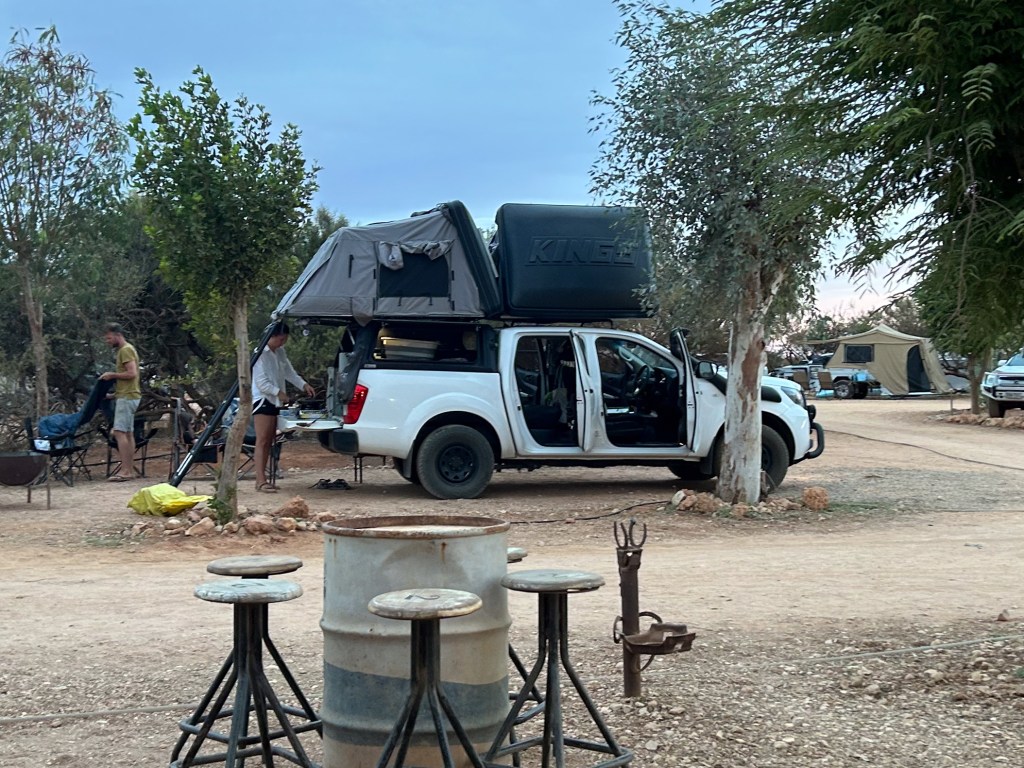
Before there were roof tents and urban 4WDs with Lane Assist, backpacking Australia meant buying a Ford or Holden station wagon (are they even a thing anymore?), a single Primus burner, a frypan and a spatula/egg-flip, a 10L water bladder you stuck in the sun for showering, and perhaps a small tent if you didn’t sleep in your car. You drove to hot and red places and met the cast of Wolf Creek, people that strove to exist under the radar. You saw snakes on the road digesting whole kangaroos, and something ate through your plastic container of pancake mix. That’s the way my Kiwi cuzzies did it, and both of them ended up marrying the partners they travelled with. A better relationship tester I cannot think of.
Fast forward to 2025. You’re a 23 year old French couple, incredibly lean, light framed (would make great cyclists), deeply tanned, effortlessly beautiful, your standard response to most things is a je-ne-sais-pas shrug, and you are living your Aussie outback dream. But growing up in the arrondissements has not equipped you for this.
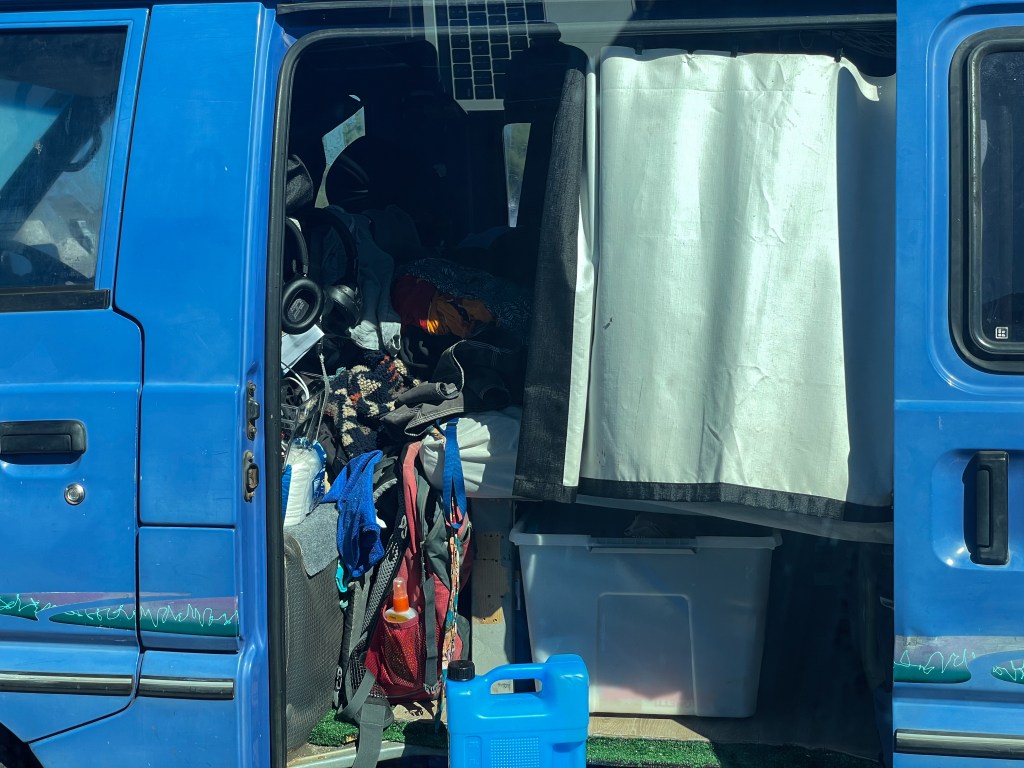
Your Range Rover is stuffed to the ceiling with everything from plastic beer tankards to a blue satin sleep mask, empty sunglasses cases, sundry plastic gadgets, empty two minute noodle containers and a hair bandana. And that’s just the front dash. You’ve populated two more car parks with your boogie board, plastic bins, ancient kite surfboard, water container and a Birkenstock. You’ve lost the ladder to your rooftop tent and the cover, so it appears to have collapsed in a heap on your roof and resembles a taco.
Yesterday you lost your only car key. Another key can only be made in the UK factory based on the engine VIN number and will take eight months. You spend two days on the beach waving a defective metal detector with a friend sifting the sand by hand in search of the car key where it probably, maybe, got dropped. Unsure.

Passing strangers show up and sift alongside you with no success. Your partner has to hitch a lift 20km to a spot with enough coverage to call the tow truck guy, then sit there for a call back to say that he was on his way, then get another 20km lift back to meet him. The towie had already been there the day before to break into your car, but only the driver’s door was able to be opened and you couldn’t get to all the stuff jammed in the back, including your food.

Waz and I joined the roll call of those determined to find the elusive key to your kingdom, but after reducing our nails to stubs and 10sqm of displaced sand later, we regrettably returned to our car, just as the towie arrived. Waz was dispatched to retrieve the treasure hunters from the dunes, and by the time they breathlessly returned, the towie had already backed up and told me a joke.
Towie: “Know why Range Rovers have heated back windows?
Me: “They do?”
Towie: “Yep. Keeps your hands warm while you’re pushing them. Hahaha”.
We chatted about how many calls he gets and Vehicles Most Likely to Fail, as you do, and then he predicted, “This car will end up at the wreckers. Had the same thing not long ago. Guy couldn’t get a key, had to trash his car.“
I see this scenario so often, I’ve invented a collective noun for it: A Debacle of Backpackers.
After 200000km around Oz, Waz and I are not eternally surprised when stuff happens. Like this. It was a boiling hot day. Waz had developed a very high temperature and because it wasn’t abating, spent a couple of days in Exmouth Hospital, while causes were unravelled. I was back at camp 80km away, without coverage and a free diary so thought I’d pop down the road for a snorkel at Oyster Stacks. I jumped in the car in bikini and towel, threw gear in the back and roared off. Three kilometres down the road the steering was off, so I stuck my head out of the window to hear a suboptimal sound and pulled over.
The rear drivers side tyre had disintegrated, frilling out decoratively around the rim. I had expected to avoid tyre changes for longer in a six week old vehicle.
First lesson: Tyres on new cars are special cheapo issue, with only half the tread of the type of tyre you’d actually want.

No worries, I’ll get the spare out, bingo, bango, bongo. With Waz away, I had taken the opportunity to empty the trailer of everything I deemed unnecessary without managerial oversight and into the car, a temporary Bin of Abandonment, not dissimilar to aforementioned backpacker vehicles. After 20 minutes, I had unearthed the jack, moved every random item out including the 80L Engel (fridge) but failed to locate the tyre toolkit. Sitting in the back feeling underdressed, with the door up and hazards on, reading a manual I never intended to, the March flies start biting.
As mentioned before, Waz had engaged a crowd in Adelaide to remove the third row of seats, and fit out the back with an extra battery, platform etc. Apparently, the tyre tools went the way of the third row. No worries, I’ll borrow someone else’s. The sparse passing vehicle traffic was driven by a mixture of no idea/infirm/hire vehicle/not getting involved, so I set off in my jandals, bikini and rashie to walk back to camp and hopefully borrow a tyre kit.
I found a guy in a Prado with three small overheated kids on a promise to go to Sandy Bay, who kindly loaned me his tools. I found a campers Starlink dish and may have aggressively texted Waz in ALL CAPS. The camp host drove me back to the car to give me a hand.
Lesson Two: Just because it’s a Prado, doesn’t mean the tyre kit is the same.
The spare is located under the vehicle with access via a flimsy plastic, very small, unnecessary channel, requiring a certain size tool. After a lot of heat, dust, flies and cries from me of, “Just break the bloody thing, I no longer care”, the tyre was liberated. But despite the collective efforts of the host (“It’s not safe to drive up onto the hard seal”), my new Swedish buddy, who had spent half a day combing sand for the French couple and would not leave until I was sorted, and his German friend (“No good. It is time for gin!”), the jack kept sinking in the sand.
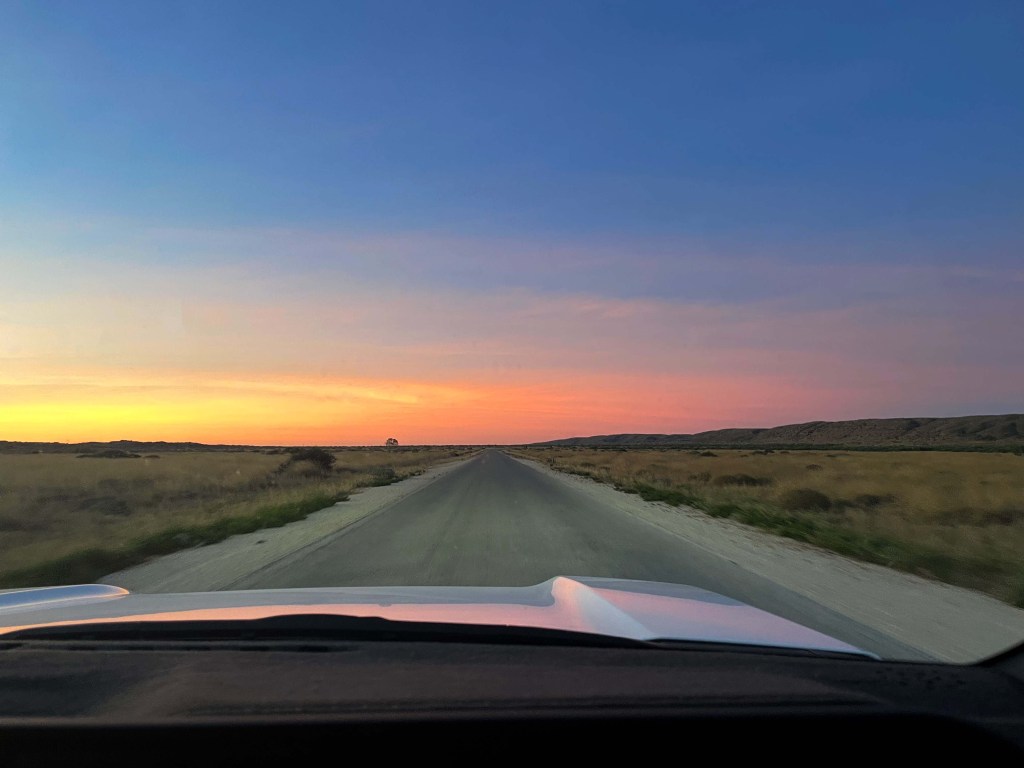
Five hours had passed. Dusk was descending. All I needed was the kind of person towing a fishing boat who would have all the tools, break the rules.
“Gidday. How ya goin’?”. Two guys hauling a Jetski, driving home from surfing the reef, simply nod at my expression and calmly pull over. Ten minutes later, done. The sun sank, and everyone could go home.
Lesson Three: People are awesome.

When turtles think you’re a turtle
Posted: June 23, 2025 Filed under: Camping, roadtrip, WA | Tags: adventure, asia, nature, scuba-diving, travel 1 Comment

While Waz is putting finishing touches to the camp, I’m long gone, in the 29 degree water and looking for my old mates Cookie, Blondie, Bully, Kermit and Shark Bait. Right on cue, Kermit rounds up on me and swims right into my camera. Obviously the Rottnest Quokka Selfie phenomenon blowing up has reached Ningaloo and the turtles want Insta cred. I felt I was being given a personal welcome, and I wasn’t wrong. I saw 14 turtles in the space of 30 minutes and they were loving the camera. What they don’t love is moronic snorkellers chasing them with Go Pros on sticks, and hence the answer to the question “How come you see so many?”. I’ve perfected the turtle drift, so much so they regularly swim up beside me and look at me expectantly.

There are only seven species of Sea turtle in the world, and Ningaloo/Nyinggulu host five; Most commonly the Green (endangered), Hawksbill (critically endangered), and Loggerhead (vulnerable), and occasionally the Leatherback (vulnerable) and Flatback (insufficient data), leaving only Kemp’s Ridley, and Olive Ridley, found mainly in the Atlantic, Indian and Pacific oceans.

The Green Sea Turtle abounds in Osprey Bay and each year I see many of the same ones. Case in point, Cookie. So named because she is tough, and has been snacked on, probably by a Tiger Shark – turtles being their favourite food. I’m petrified of Tiger Sharks and the only bit of advice given to me by a boating local who told me that OF COURSE they are inside the reef was: “They eat turtles. Don’t swim like a turtle.”

Most mornings I head out for a bay reconnaissance after an early walk. If the tide is low, the walk gets shunted, and the only thing that would keep me out is if it’s high tide, blowing a gale and a massive swell to boot. Ok, well that wouldn’t actually put me off. More often than not I come back in unable to operate my fingers and looking like something the cat dragged in. Because I’m first out, I get to see all manner of species doing the stuff they do when no-one is looking, trying to touch them or chasing them. This includes all the skittish things like 3m cowtail rays and white tip reef sharks.

The first time I saw a black tip reef shark, we both levitated, then took off in opposite directions. My video kept running and documents me panting and effecting a record freestyle time as I swim to shore. Sitting in the shallows, a tiny 2cm Spanish Dancer swam up to my finger and sat on it. In 15 years, I have never seen another. My video of it is back in Adelaide so I will have to add that later. Point being, I probably see the most amazing things when I have stopped looking. Surely that’s a life lesson.
Time to automate! If you would like to get an email letting you know when I have a new post, go to my home page and subscribe to follow.
Like more vids and images? Check out my new Insta page. @_wild_australia
Not at all soft.
Posted: June 6, 2025 Filed under: Iconic Australian images | Tags: adventure, Australia, Camping, exmouth, hiking, landscapes, nature, outback, roadsides, Roadtrips, travel, WA 1 Comment
As you travel through the Gascoyne region toward Exmouth, Cape Range National Park and Ningaloo/Nyinggulu reef, the terrain quickly becomes deep red and festooned with vegetation that is generally out to get you. Soft looking spinifex will shred your shins faster than you can say “wish I’d picked another path”, and snakes, bull-ants and March flies with anger management issues sit seething in wait. Our eventual destination is Osprey Bay, 80km from Exmouth town, and 1250km north of Perth.
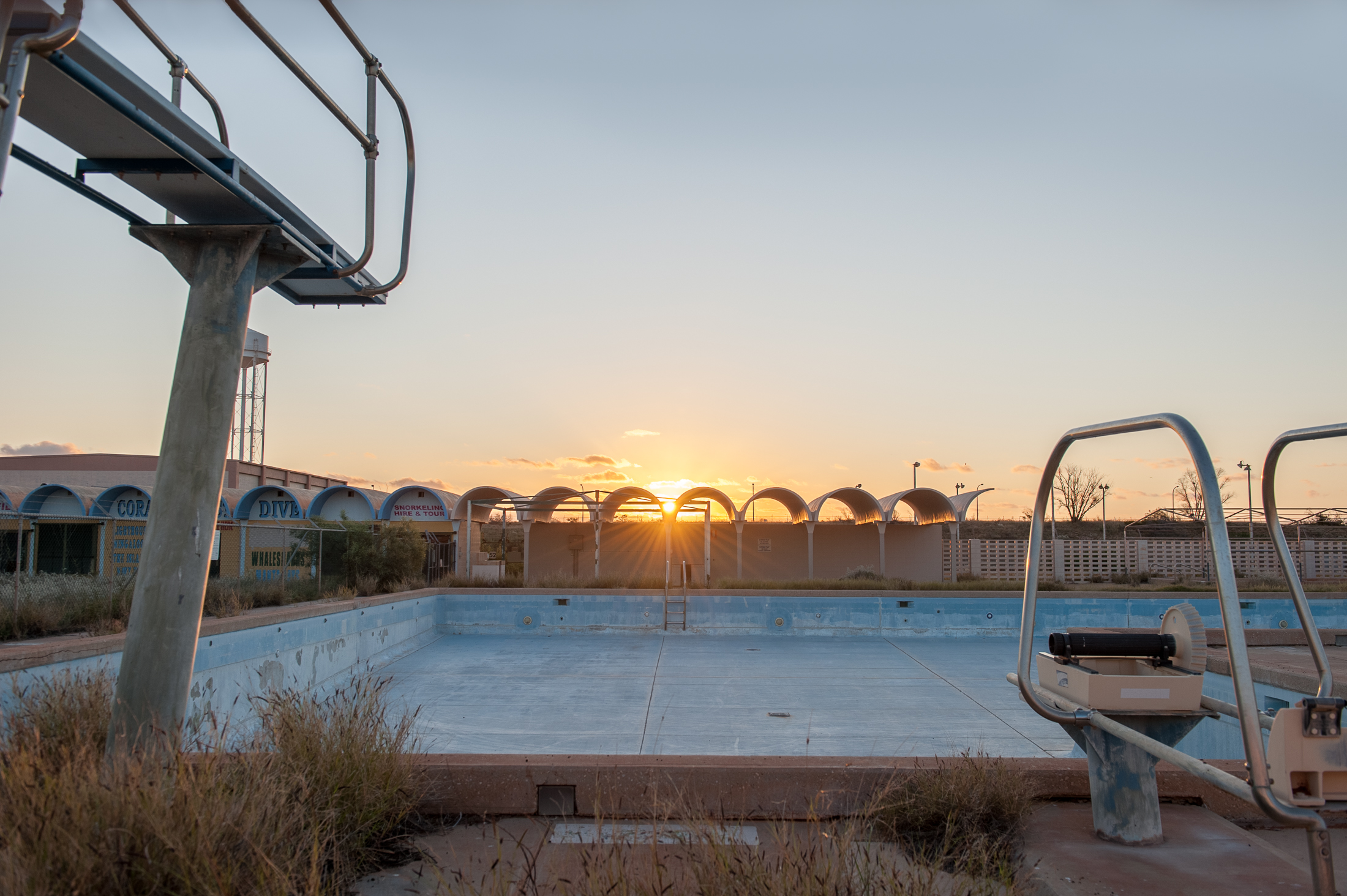
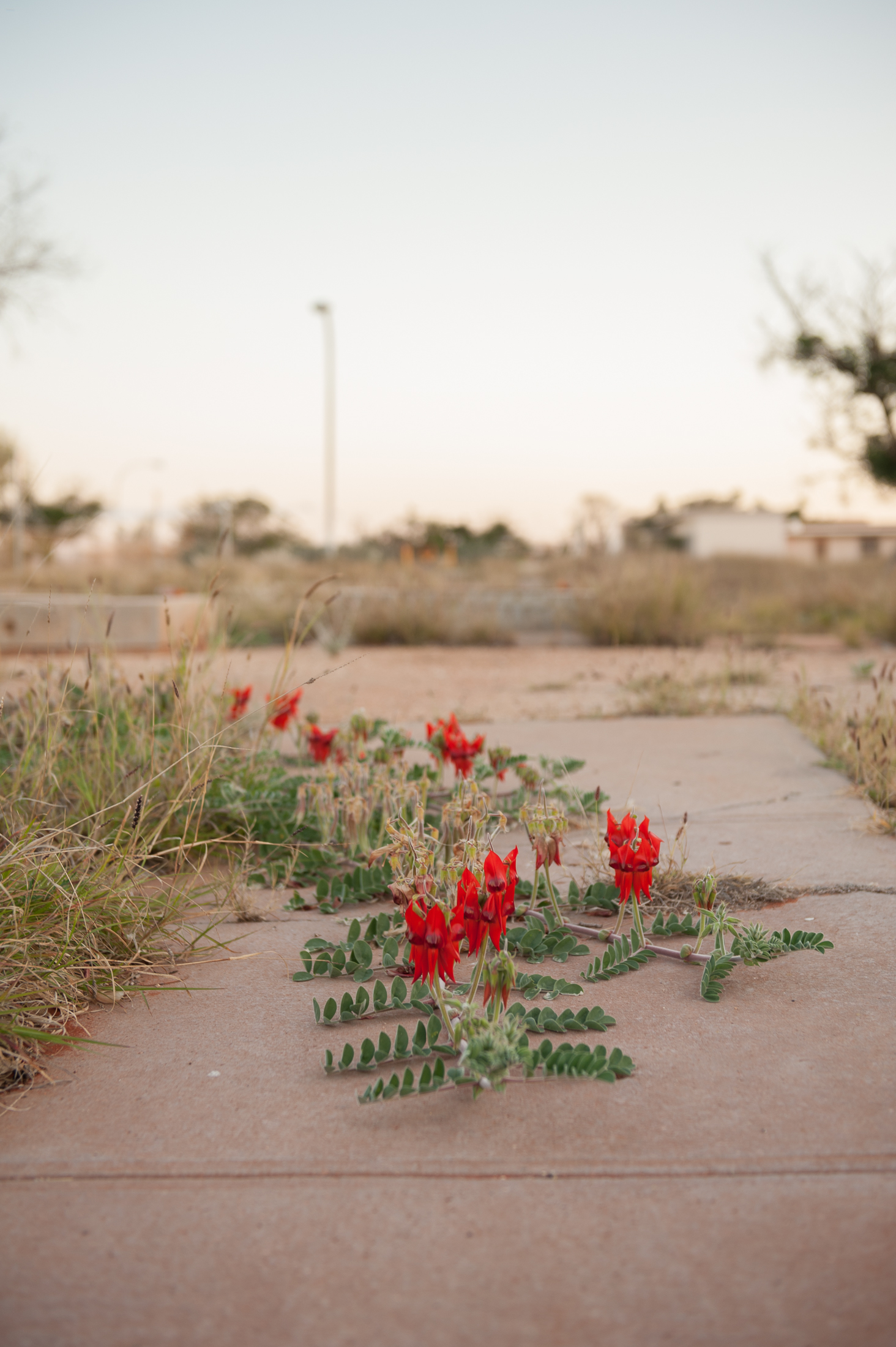
Exmouth was created in 1967 to support US naval operations during the Cold War, specifically a very-low-frequency transmitting station capable of sending messages to submarines. The transmissions are enabled by incredibly high spidery towers, including one that is 387 metres high, the tallest man made structure in the Southern Hemisphere until Tower 108 in Melbourne in 2019 took the title. Not sure why. In 1992, the US Navy passed command to the Royal Australian Navy and it is now run by Defence. For military buffs, Mike Hughes gives a more detailed account and the comments section has some interesting memories shared by those who worked there over the decades. Before Russia got a bit excited once more in recent times and security ramped up, you could walk around the 1960’s American base with the original architecture, bowling alley, swimming pool, and super wide streets, like it was a museum.

Over the last couple of years a veritable farm of radars has popped up, allegedly weaponised, as one undoubtably anti-vaxxer whispered to Warren. This farm turns out to be Australia’s Deep-Space Advanced Radar Capability (DARC), a joint tri-nation endeavour between the US, UK and Australia, to globally track objects up to 22,000 miles above Earth, like weather, space debris, and oh yes, hostile or ‘malign’ activity.
Thundering past the radar farm every morning at around 8am, vehicles and caravans point missile-like to their allotted campsites, whereupon they circle like vultures until the incumbents vacate. Many of these stay the night before at Bullara Station, a working cattle station that started out with a few campsites on offer around 15 years ago, and now offers lodge accomodation, huts, cottages, and fancy safari tents as well for 100’s of people per night.


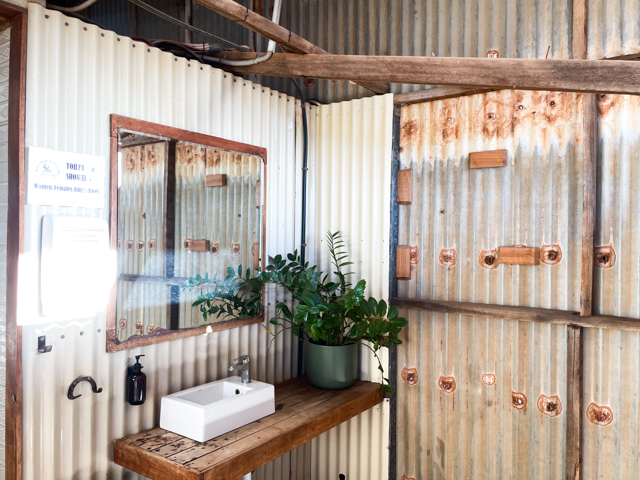

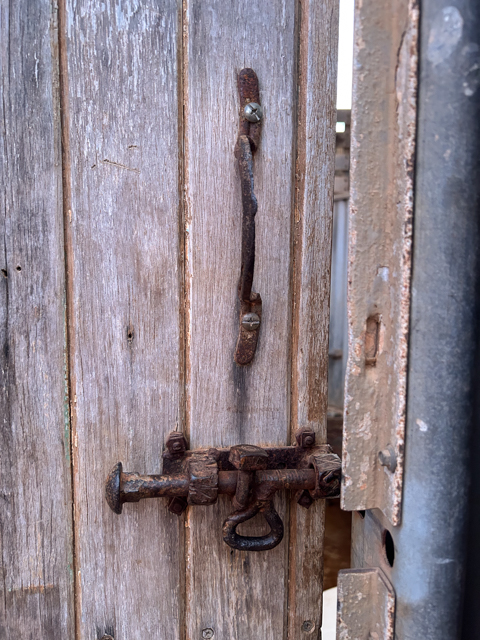
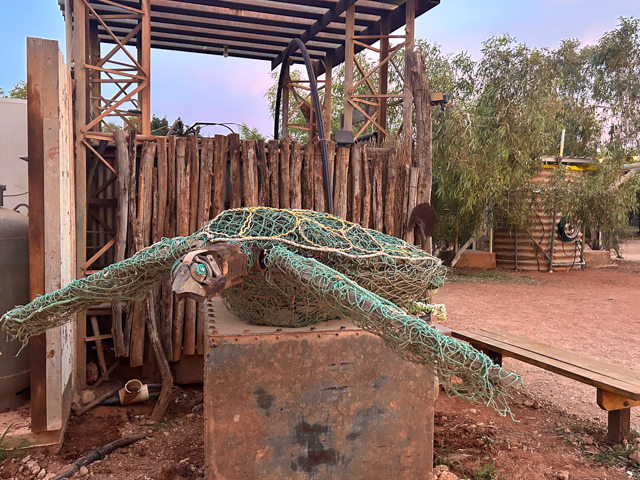
It features one of my favourite kinds of architecture, I call it Colonial Outback Station. Remoteness, extremely harsh environments and 1400km to Bunnings has spawned incredibly creative and beautiful re-use of practical farm equipment and materials. Horse-shoes become door pulls, windmill blades make signs, wire becomes a chandelier. Giving early settler hut vibes, you see this kind of architecture in places like El Questro, and other stations that have opened their gates to travellers wanting an authentic outback experience. With coffee. And scones. And helicopters. It makes me want to recreate it at home in Adelaide. But then it would be like the crochet beaded top I bought in Sorrento, Italy, that had no business in Woodend, Victoria.
The other thing, perhaps the main thing, about Bullara is the famed ‘Burger Night’, stated in reverential and knowing tones. People the world over book their Bullara stay for a Friday for the station beef burger and live music. Didn’t seem enough of a draw to warrant the fame, until the conga line was mentioned. It was Sunday, and with a dawning state of FOMO we resolved to book Burger Night on the way back. Tomorrow, we finally get to Osprey Bay.

You’re a galah.

 As I see it